Corruption Charges in India:- A Case Law Analysis
Corruption Charges in India: A Case Law Analysis
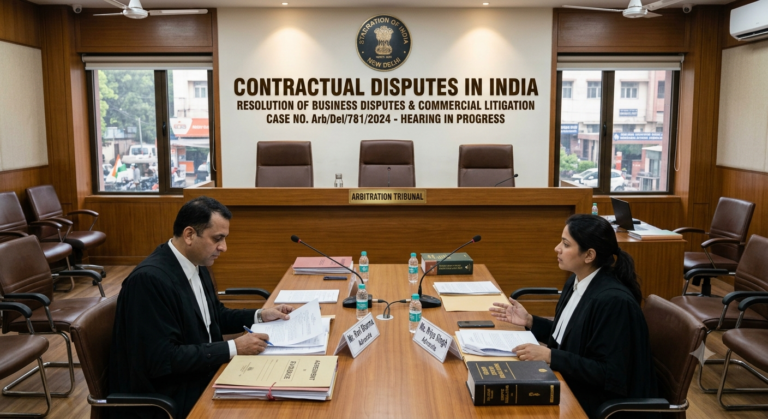
A corruption trial is an unusual criminal proceeding. There is rarely a body, seldom an eyewitness who is not himself a participant, and almost always a complainant who has an interest of his own in the outcome. What the prosecution has instead is a conversation, a trap, a quantity of treated currency and a set of accounts. The Prevention of Corruption Act, 1988 was enacted to consolidate and widen the law on that footing, and it was substantially recast in 2018 — the bribe-giver made an offender, the definition of criminal misconduct cut down to two heads, and a fresh approval made a precondition to investigation itself.
The case law is therefore layered, and reading it requires attention to which text a decision was construing. Almost every question that decides a trial has nevertheless been settled by the Supreme Court. B. Jayaraj and P. Satyanarayana Murthy made proof of demand indispensable; Neeraj Dutta then held that it may be proved by circumstance where the complainant is gone. Wasudeo Kaidalwar and Vasant Rao Guhe fixed the order of proof in a disproportionate-assets case; Nanjappa made an invalid sanction jurisdictional; Sita Soren removed the last shelter of the legislator. What follows reads these decisions together, as a single conversation between the courts, the investigating agencies and the public servants they pursue.
Corruption in a civilised society is a disease like cancer — the register in which the Court has consistently written about this Act, and the reason its procedural safeguards have been read strictly while its substantive reach has been read wide.
One trap engages at least seven distinct enquiries: whether the accused is a public servant at all, whether a demand was made and can be proved, whether the statutory presumption arises and has been displaced, whether the assets are disproportionate to known sources, whether approval and sanction were obtained, whether the investigation and trap will withstand scrutiny, and what the evidence on the record can be made to carry. Each has its own gatekeeper and its own standard, and the practitioner’s first task is to know which enquiry a given set of facts opens.
Who is a public servant
The Act does not follow the employment relationship; it follows the public duty. Section 2(c) has twelve clauses, and the Court has read them functionally, so that private bankers, deemed-university trustees and elected legislators are all within the Act.|
THE OBVIOUS CASES
|
THE EXTENDED CASES
|
THE TESTS THE COURT APPLIES
|
|
A LEGISLATOR IS A PUBLIC SERVANT — AND HAS NO IMMUNITY
Members of Parliament and of the State Legislatures fall within s. 2(c). The privilege under Articles 105(2) and 194(2) does not shelter a legislator who accepts a bribe to speak or vote, because the offence is complete on the acceptance and is not “in respect of” anything said or voted.
Sita Soren v. Union of India, (2024) 5 SCC 629 (7J), overruling P.V. Narasimha Rao, (1998) 4 SCC 626 on immunity |
THE PRIVATE BANK IS NOT OUTSIDE THE ACT
The chairman, directors and officers of a private banking company are public servants for the purposes of the Act, by force of s. 46A of the Banking Regulation Act, 1949 read with s. 2(c).
Central Bureau of Investigation v. Ramesh Gelli, (2016) 3 SCC 788 |
NOR IS THE DEEMED UNIVERSITY
A trustee or office-bearer of a deemed university performs a public duty in relation to education and is a public servant; the beneficial object of the Act requires the definition to be read purposively rather than restrictively.
State of Gujarat v. Mansukhbhai Kanjibhai Shah, (2020) 20 SCC 360 · Manish Trivedi, (2014) 14 SCC 420 |
| Authority | Ratio decidendi | Practice insight |
|---|---|---|
|
P.V. Narasimha Rao v. State (CBI/SPE)
(1998) 4 SCC 626 · SC (5J) · s. 2(c); legislators |
A Member of Parliament is a public servant within s. 2(c), notwithstanding the absence of any authority competent to remove him. (The majority’s further holding that a legislator who accepted a bribe and then voted was immune under Article 105(2) has since been overruled.) | Still the authority for the status of a legislator as a public servant. On immunity it must now be cited only through Sita Soren, and never on its own. |
|
Sita Soren v. Union of India
(2024) 5 SCC 629 · SC (7J) · Articles 105(2) and 194(2) |
A legislator who accepts a bribe to speak or vote enjoys no immunity under Article 105(2) or 194(2). The offence is complete on the acceptance of the illegal gratification and does not depend on the subsequent speech or vote, so it is not an act ‘in respect of’ anything said or voted in the House. P.V. Narasimha Rao is overruled on this point. | The immunity defence is gone, in the House and in the committee alike. Advise legislators and those who deal with them on that footing. |
|
Central Bureau of Investigation v. Ramesh Gelli
(2016) 3 SCC 788 · SC (2J) · Private banks |
The chairman, directors and officers of a private banking company are public servants for the purposes of the Act, by force of s. 46A of the Banking Regulation Act, 1949 read with s. 2(c). The absence of any State shareholding is immaterial. | Private-sector banking executives are exposed to the Act as much as their public-sector counterparts. Compliance and internal-investigation protocols should be drafted on that assumption. |
|
State of Gujarat v. Mansukhbhai Kanjibhai Shah
(2020) 20 SCC 360 · SC (2J) · Deemed universities |
A trustee or office-bearer of a deemed university is a public servant. The Act is a social-welfare legislation to be construed purposively, and education is a public duty in which the community at large has an interest. | Educational trusts, aided institutions and their office-bearers should be treated as within the Act. The private character of the institution is not an answer. |
|
Manish Trivedi v. State of Rajasthan
(2014) 14 SCC 420 · SC (2J) · Elected local office |
An elected member of a municipal council is a public servant; it is the public duty attaching to the office, and not the mode of appointment or the source of remuneration, that brings the holder within s. 2(c). | Applies across panchayat, municipal and co-operative office. The argument that an honorary or elected office-holder is outside the Act is not available. |
The demand — what the prosecution must prove
Demand is the gravamen. Acceptance without a proved demand does not complete the offence, and recovery of treated currency proves possession rather than a demand. The only relaxation the Court has allowed is in the mode of proof, not in the requirement.| Demand
the public servant asks for, or obtains, an undue advantage
Indispensable. Without proof of demand there is no offence under s. 7, and none under the former s. 13(1)(d). |
→ | Acceptance
the advantage is received, by himself or through another
Necessary but not sufficient. Acceptance without a proved demand does not complete the offence. |
→ | Recovery
the tainted currency is seized from the accused
Corroborative only. Recovery alone, however cleanly effected, proves possession — not a demand. |
|
RECOVERY WITHOUT DEMAND IS NOTHING
Where the complainant turns hostile and the demand is not otherwise established, the mere recovery of currency from the accused will not sustain a conviction under s. 7 or the former s. 13(1)(d).
B. Jayaraj v. State of A.P., (2014) 13 SCC 55 · Suraj Mal, (1979) 4 SCC 725 |
THE DEMAND IS THE GRAVAMEN
Proof of demand is a sine qua non. Absent it, the offence is not made out however complete the trap and however unimpeachable the recovery; the presumption under s. 20 cannot be used to supply the demand itself.
P. Satyanarayana Murthy v. District Inspector of Police, (2015) 10 SCC 152 |
BUT A HOSTILE WITNESS IS NOT THE END
The case does not collapse merely because the complainant resiles. The evidence of the trap and shadow witnesses, the recovery and the surrounding circumstances may together establish the demand.
Krishan Chander v. State of Delhi, (2016) 3 SCC 108 · Mukhtiar Singh, (2017) 8 SCC 136 |
| Authority | Ratio decidendi | Practice insight |
|---|---|---|
|
Suraj Mal v. State (Delhi Administration)
(1979) 4 SCC 725 · SC (2J) · Recovery is not proof |
Mere recovery of tainted currency from the accused, divorced from proof that he voluntarily demanded and accepted it as a bribe, is not sufficient to sustain a conviction; the presumption cannot be drawn on recovery alone. | The oldest and still the cleanest statement of the point. It is the answer to a charge sheet built around the seizure memo. |
|
B. Jayaraj v. State of A.P.
(2014) 13 SCC 55 · SC (2J) · Hostile complainant; no demand |
Where the complainant turns hostile and no other evidence establishes the demand, conviction under s. 7 and the former s. 13(1)(d) cannot be sustained. Proof of acceptance or recovery, without proof of demand, does not attract the presumption under s. 20. | The standard acquittal authority where the complainant resiles and the prosecution has led nothing else on demand. Its force is now qualified by Neeraj Dutta. |
|
P. Satyanarayana Murthy v. District Inspector of Police
(2015) 10 SCC 152 · SC (2J) · Demand as sine qua non |
Proof of demand of illegal gratification is the gravamen of the offence and a sine qua non for conviction; in its absence the offence is not made out however satisfactory the evidence of acceptance and recovery. | Cite alongside B. Jayaraj. For the prosecution, the lesson is to prove the demand independently rather than rely on the mechanics of the trap. |
|
Neeraj Dutta v. State (Govt. of NCT of Delhi)
(2023) 4 SCC 731 · SC, Constitution Bench · Mode of proof |
In the absence of direct or primary evidence of demand — where the complainant is dead, unavailable or hostile — the demand may be proved by other oral and documentary evidence, and by inference from the proved circumstances. Circumstantial proof of demand is permissible, provided the inference is the only reasonable one. | The most important recent decision for the prosecution. It does not dilute the requirement of demand; it enlarges the material from which the demand may be found. |
|
Mukhtiar Singh v. State of Punjab
(2017) 8 SCC 136 · SC (2J) · Demand and acceptance together |
Both demand and voluntary acceptance must be proved beyond reasonable doubt, and the evidence must exclude the possibility that the money was thrust upon the accused or planted; where the version is improbable, the benefit of doubt follows. | For the defence, the profitable line is that the money was left behind or forced on the accused. It requires contemporaneous protest or immediate reporting to be credible. |
The presumption under section 20
The Act reverses the burden, but only after the prosecution has done its own work. The presumption arises on proof of acceptance, presumes the purpose of that acceptance, and is rebuttable on the civil standard.|
ONE
The foundational fact must be proved
The presumption under s. 20 arises only when it is proved that the public servant accepted or agreed to accept an undue advantage. That acceptance is a fact to be established by evidence; it is not itself presumed. |
→ |
TWO
The purpose is then presumed
On proof of acceptance the court shall presume that the advantage was accepted as a motive or reward for the doing of an official act. The presumption is compulsory in form — “shall presume” — and legal, not merely permissive. |
→ |
THREE
The accused may rebut it
The burden on the accused is to establish a probable defence on the preponderance of probabilities; he need not prove it beyond reasonable doubt, and he may rely on the prosecution’s own evidence and the circumstances. |
|
A LEGAL PRESUMPTION, NOT AN INFERENCE
The presumption under s. 20 is one the court is bound to draw once the foundational fact is established; it is not an inference of fact left to judicial discretion, and reasons are not required for drawing it.
M. Narsinga Rao v. State of A.P., (2001) 1 SCC 691 |
REBUTTAL IS ON THE CIVIL STANDARD
The accused discharges the burden by rendering the prosecution version improbable; he need not enter the witness box or establish his defence beyond reasonable doubt, and a plausible explanation consistent with innocence suffices.
C.M. Girish Babu v. Central Bureau of Investigation, (2009) 3 SCC 779 |
AND THE BENEFIT OF DOUBT SURVIVES
Where two views are reasonably possible on the evidence of demand and acceptance, the view favourable to the accused must be taken, and an appellate court will not disturb an acquittal merely because another view is possible.
A. Subair v. State of Kerala, (2009) 6 SCC 587 · N. Vijayakumar, (2021) 3 SCC 687 |
| Authority | Ratio decidendi | Practice insight |
|---|---|---|
|
M. Narsinga Rao v. State of A.P.
(2001) 1 SCC 691 · SC (3J) · Nature of the presumption |
The presumption under s. 20 is a legal presumption which the court is bound to draw once the acceptance of gratification is proved; it is not a permissive inference of fact, and no separate reasons are required for drawing it. | The authority the prosecution leads with once acceptance is established. It shifts the argument from what was intended to what the accused can show. |
|
C.M. Girish Babu v. Central Bureau of Investigation
(2009) 3 SCC 779 · SC (2J) · Standard of rebuttal |
The presumption is rebuttable, and the accused discharges the burden on the preponderance of probabilities. He need not adduce evidence of his own and may rely on the material brought on record by the prosecution and on the probabilities of the case. | Advise the accused that he need not enter the witness box, but that the defence must be put to the prosecution witnesses in cross-examination if it is to be argued later. |
|
A. Subair v. State of Kerala
(2009) 6 SCC 587 · SC (2J) · The burden that remains |
The prosecution must prove the charge beyond reasonable doubt as in any other criminal case; the statutory presumption does not relieve it of establishing the foundational facts of demand and acceptance, and a defence that is probable is enough to displace the presumption. | The corrective to an over-reliance on s. 20. The reverse onus is on the purpose, never on the transaction itself. |
|
Krishan Chander v. State of Delhi
(2016) 3 SCC 108 · SC (2J) · Hostile witness |
The evidence of a witness who has been declared hostile is not to be discarded altogether; such part of it as is credible and corroborated may be relied on, and the prosecution case may be established through the trap and shadow witnesses and the surrounding circumstances. | The prosecution’s answer to a bought-over complainant. Lead the trap team and the verification recording carefully; they carry the case once the complainant turns. |
|
N. Vijayakumar v. State of T.N.
(2021) 3 SCC 687 · SC (2J) · Interference with acquittal |
Where two views are reasonably possible on the evidence, the view favouring the accused is to be preferred, and the High Court should not reverse an acquittal merely because another view is also possible on the same material. | The controlling authority in an appeal against acquittal. For the respondent, frame the case as one of two possible views rather than of correctness. |
Criminal misconduct and disproportionate assets
Section 13 was the widest provision in the Act and is now among the narrowest. The abuse-of-position head was deleted in 2018, leaving misappropriation and illicit enrichment; the disproportionate-assets case, which survives, has an order of proof of its own.|
SECTION 13 BEFORE 2018
five heads of criminal misconduct |
→ |
SECTION 13 AFTER THE 2018 AMENDMENT
two heads only |
|
THE PROSECUTION PROVES THE DISPROPORTION FIRST
The burden on the accused to satisfactorily account arises only after the prosecution has established, by evidence, the assets, the income from known sources and the resulting disproportion. It is not for the accused to begin.
Vasant Rao Guhe v. State of M.P., (2017) 14 SCC 442 · Wasudeo Ramchandra Kaidalwar, (1981) 3 SCC 199 |
“KNOWN SOURCES” MEANS LAWFUL SOURCES, DISCLOSED
The expression refers to sources known to the prosecution and lawfully permissible, in respect of which the public servant has made the disclosure the rules require. It is not confined to what the accused chooses to reveal at trial.
State of M.P. v. Awadh Kishore Gupta, (2004) 1 SCC 691 |
AND THE PRIVATE HOLDER CAN BE CHARGED
A person who is not a public servant may be prosecuted for abetment of the offence of possessing disproportionate assets, where the property is held in his name for the public servant.
P. Nallammal v. R. Singh, (1999) 6 SCC 559 · applied in Selvi J. Jayalalithaa, (2017) 6 SCC 263 |
| Authority | Ratio decidendi | Practice insight |
|---|---|---|
|
State of Maharashtra v. Wasudeo Ramchandra Kaidalwar
(1981) 3 SCC 199 · SC (2J) · The nature of the burden |
The burden on a public servant to satisfactorily account for pecuniary resources disproportionate to his known sources of income is not the burden of proof beyond reasonable doubt resting on the prosecution; it is discharged on the preponderance of probabilities, as in a civil proceeding. | The foundational authority on the reverse onus in a disproportionate-assets case, and the answer to the submission that the accused must establish his explanation conclusively. |
|
State of M.P. v. Awadh Kishore Gupta
(2004) 1 SCC 691 · SC (2J) · “Known sources of income” |
“Known sources of income” means sources known to the prosecution and lawfully permissible, in respect of which the public servant has made the disclosure required by the applicable rules; it is not limited to what the accused chooses to disclose at trial. | Property-return filings and service-rule disclosures become central evidence. Advise clients that an undisclosed but lawful source is not thereby a known source. |
|
P. Nallammal v. R. Singh
(1999) 6 SCC 559 · SC (2J) · Abetment by a non-public servant |
A person who is not a public servant may be prosecuted under s. 12 for abetment of the offence of possessing disproportionate assets, where property is held in his name for the public servant; the offence is not one that only a public servant can abet. | Spouses, relatives and benamidars are within reach. Structuring assets in another’s name is an exposure rather than a protection. |
|
Vasant Rao Guhe v. State of M.P.
(2017) 14 SCC 442 · SC (2J) · The order of proof |
The burden on the accused arises only after the prosecution has established, by evidence, the assets held, the income from known sources and the resulting disproportion. The accused is entitled to know the particulars of the case he must answer before the onus shifts. | Demand particulars of the check period and the computation at the outset. A charge framed without them can be attacked before the defence is called on. |
|
State of Karnataka v. Selvi J. Jayalalithaa
(2017) 6 SCC 263 · SC (2J) · Computation and conspiracy |
The computation must proceed on assets, income and expenditure over a defined check period, with income established by acceptable evidence rather than assertion; and non-public servants who held property or floated entities for the public servant are liable for conspiracy and abetment. | The template for a modern disproportionate-assets prosecution, and for its defence. Valuation methodology and the treatment of loans and gifts are where these cases are won. |
The two gates — approval and sanction
Two permissions stand between an allegation and a verdict. Section 17A, inserted in 2018, requires approval before an investigation is even begun; section 19 requires sanction before a court may take cognizance. Both are jurisdictional, and both are routinely litigated.| BEFORE INVESTIGATION | Gate one · section 17A no police officer shall conduct an enquiry, inquiry or investigation into an offence alleged to have been committed by a public servant in the discharge of his official functions or duties, without the previous approval of the competent authority |
THE EXCEPTION
Approval is not required where the public servant is arrested on the spot on a charge of accepting an undue advantage. |
| BEFORE COGNIZANCE | Gate two · section 19 no court shall take cognizance of an offence under ss. 7, 11, 13 and 15 alleged against a public servant except with the previous sanction of the competent authority |
THE CLOCK
The competent authority is to decide within three months, extendable by one further month where legal consultation is sought. |
|
SANCTION MUST SHOW A MIND APPLIED
The order must indicate that the sanctioning authority considered the material and formed its own opinion. A mechanical or rubber-stamp order, or one passed on a summary note without the record, vitiates the prosecution.
State of Karnataka v. Ameerjan, (2007) 11 SCC 273 · CBI v. Ashok Kumar Aggarwal, (2014) 14 SCC 295 |
AN INVALID SANCTION GOES TO JURISDICTION
Where the sanction is found invalid, the Special Judge has no jurisdiction to try the case, and s. 19(3) does not save the trial; the proper course is acquittal or discharge, leaving a fresh prosecution on a valid sanction open.
Nanjappa v. State of Karnataka, (2015) 14 SCC 186 |
BUT DELAY ALONE DOES NOT VITIATE
The outer limit for deciding a sanction request is mandatory in the sense that the authority must decide within it, but a failure to do so does not by itself invalidate a sanction subsequently granted; the remedy lies in accountability, not acquittal.
Vijay Rajmohan v. Central Bureau of Investigation, (2023) 1 SCC 329 |
| Authority | Ratio decidendi | Practice insight |
|---|---|---|
|
Parkash Singh Badal v. State of Punjab
(2007) 1 SCC 1 · SC (2J) · s. 19; the relevant date |
Sanction under s. 19 is required only where the accused is holding, at the date the court takes cognizance, the office he is alleged to have misused; a public servant who has demitted that office needs no sanction. Section 197 CrPC operates on a different footing and its protection is not co-extensive. | Identify the office held on the date of cognizance, not the date of the offence. The point disposes of a large proportion of sanction objections. |
|
State of Karnataka v. Ameerjan
(2007) 11 SCC 273 · SC (2J) · Application of mind |
An order of sanction must demonstrate that the sanctioning authority applied its mind to the material placed before it and formed its own opinion; a mechanical order, or one that merely recites the charge, is no sanction in law. | Call for the sanction file and the note on which it was passed. Where the material was not before the authority, the order will not survive. |
|
Central Bureau of Investigation v. Ashok Kumar Aggarwal
(2014) 14 SCC 295 · SC (2J) · The material considered |
The sanctioning authority must be furnished with the entire material collected during investigation, and the validity of the sanction is to be tested on whether that material was before it and was considered; the order need not, however, record detailed reasons. | The defence attack is on what was placed, not on the elegance of the order. Seek the list of documents forwarded with the sanction proposal. |
|
Nanjappa v. State of Karnataka
(2015) 14 SCC 186 · SC (2J) · Invalid sanction; jurisdiction |
Where the sanction is invalid, the Special Judge lacks jurisdiction to try the case, and s. 19(3) does not cure the defect; the accused is entitled to be acquitted or discharged, leaving a fresh prosecution on a valid sanction open. | Take the objection at the earliest, since s. 19(3) bars a belated challenge founded merely on error or irregularity. Absence of sanction is a different matter from a defective one. |
|
Vijay Rajmohan v. Central Bureau of Investigation
(2023) 1 SCC 329 · SC (3J) · Delay in sanction |
The competent authority must decide a sanction request within the period the statute prescribes, and consultation with the Central Vigilance Commission or the Department of Personnel does not extend it indefinitely; but a sanction granted beyond the period is not for that reason invalid, the consequence of delay being accountability rather than acquittal. | Delay is a ground for a writ and for judicial censure, not for discharge. Do not plead it as though it were fatal. |
The investigation and the trap
The trap is the characteristic instrument of this jurisdiction, and it is attacked at predictable points: the absence of a preliminary enquiry, the quality of the independent witness, the chain of custody and the approval under section 17A.| Complaint the demand is reported to the anti-corruption agency | → | Verification the demand is confirmed, ordinarily by a recorded conversation | → | Pre-trap panchnama currency treated with phenolphthalein · numbers noted · independent witnesses | → | The trap the advantage is accepted · the shadow witness observes | → | Post-trap and seizure hand-wash test · recovery · seizure memo · investigation follows |
|
WHAT THE RECORD MUST ESTABLISH
|
WHAT WILL NOT BY ITSELF DO
|
|
A PRELIMINARY ENQUIRY IS NOT A PRECONDITION
Registration of a first information report does not await a preliminary enquiry. Such an enquiry is permissible to ascertain whether the information discloses a cognizable offence, but it is not a mandatory step, and its absence does not vitiate the investigation.
State of Telangana v. Managipet, (2019) 19 SCC 87 · Lalita Kumari, (2014) 2 SCC 1 |
AN OPEN ENQUIRY IS NOT AN INVESTIGATION
A notice calling a public servant to appear and explain his assets, issued in the course of an open or discreet enquiry before any first information report, is not an investigation and does not offend the protection against self-incrimination.
Charansingh v. State of Maharashtra, (2021) 5 SCC 469 |
THE TRAP DOES NOT DISPENSE WITH PROOF
A trap laid and executed faultlessly still proves only what it records. The prosecution must establish the demand; the machinery of the trap corroborates that case, it does not constitute it.
State of Punjab v. Madan Mohan Lal Verma, (2013) 14 SCC 153 |
| Authority | Ratio decidendi | Practice insight |
|---|---|---|
|
Lalita Kumari v. Government of U.P.
(2014) 2 SCC 1 · SC (5J) · Preliminary enquiry |
Registration of a first information report is mandatory where the information discloses a cognizable offence. A preliminary enquiry is permissible, in a limited category that includes corruption cases, only to ascertain whether the information discloses such an offence, and should ordinarily be concluded within the period indicated. | The general framework. It permits a preliminary enquiry in corruption matters but does not make one a precondition. |
|
State of Telangana v. Managipet
(2019) 19 SCC 87 · SC (2J) · Enquiry not mandatory |
A preliminary enquiry is not a mandatory precondition to the registration of a first information report under the Act, and the absence of one does not vitiate the investigation or the trial that follows. | Forecloses a common quashing petition. The attack must be on the content of the information, not on the omission of an enquiry. |
|
Charansingh v. State of Maharashtra
(2021) 5 SCC 469 · SC (2J) · Pre-registration enquiry |
A notice issued by an anti-corruption bureau calling a public servant to appear and explain his assets, in the course of an open enquiry before any first information report, is not an investigation; it does not offend Article 20(3) and the person summoned is not an accused. | Attendance may be compelled at the enquiry stage. Advise the client that the protection against self-incrimination is not engaged, but that the answers will be used. |
|
State of Punjab v. Madan Mohan Lal Verma
(2013) 14 SCC 153 · SC (2J) · What the trap proves |
A trap corroborates the prosecution case; it does not constitute it. The demand must still be established, and the evidence of the trap team is to be scrutinised with the care appropriate to interested testimony. | For the defence, separate the demand from the trap in cross-examination. For the prosecution, ensure the verification stage independently records the demand. |
|
Subramanian Swamy v. Manmohan Singh
(2012) 3 SCC 64 · SC (2J) · The right to seek sanction |
A private citizen who has filed a complaint is entitled to seek sanction for prosecution, and the competent authority must decide the request within a reasonable period; unexplained inaction defeats the object of the Act and is amenable to judicial correction. | The basis of a mandamus where a sanction request has been left pending. Record the date of the request and each reminder. |
Evidence, sentence and the reach of the agency
What remains is the record: what it is permitted to carry, what follows from a conviction, and whether the agency needed anyone’s leave to investigate in the first place.|
THE EVIDENTIARY PERIMETER
|
THE CONSEQUENCES
|
|
NO CLASSIFICATION AMONG THE CORRUPT
Section 6A of the Delhi Special Police Establishment Act, which required prior approval before investigating officers of the rank of Joint Secretary and above, was struck down as creating an impermissible classification among public servants.
Subramanian Swamy v. Director, CBI, (2014) 8 SCC 682 (Constitution Bench) |
ENTRIES ARE NOT EVIDENCE OF PAYMENT
Entries in loose sheets or diaries maintained by a third party are not admissible under s. 34 of the Evidence Act as books of account regularly kept, and even admissible entries are not by themselves sufficient to fasten liability.
Central Bureau of Investigation v. V.C. Shukla, (1998) 3 SCC 410 |
SENTENCING WITHOUT SYMPATHY
Corruption corrodes the administration and undermines public confidence. Courts should not take a lenient view in sentencing, and a convicted public servant cannot ordinarily expect to continue in office pending appeal.
State of Maharashtra v. Balakrishna Dattatrya Kumbhar, (2012) 12 SCC 384 |
| Authority | Ratio decidendi | Practice insight |
|---|---|---|
|
Subramanian Swamy v. Director, Central Bureau of Investigation
(2014) 8 SCC 682 · SC, Constitution Bench · s. 6A, DSPE Act |
Section 6A of the Delhi Special Police Establishment Act, which required prior approval of the Central Government before investigating officers of the rank of Joint Secretary and above, creates an impermissible classification among public servants and is struck down as violative of Article 14. | Seniority confers no procedural immunity from investigation. The protection now available is the general one under s. 17A, which applies to every public servant alike. |
|
Central Bureau of Investigation v. V.C. Shukla
(1998) 3 SCC 410 · SC (3J) · Diaries and loose sheets |
Loose sheets and personal diaries are not books of account regularly kept in the course of business within s. 34 of the Evidence Act; and even entries that are admissible are not by themselves sufficient to fasten liability on the person named without independent corroboration. | The controlling authority whenever a prosecution rests on seized records of payments. Corroboration must be independent of the document itself. |
|
State of Karnataka Lokayukta v. M.R. Hiremath
(2019) 7 SCC 515 · SC (2J) · s. 65B; stage of objection |
The certificate required by s. 65B of the Evidence Act in respect of an electronic record need not be produced at the stage of framing charge; its absence at that stage is not a ground for discharge, and the objection is to be taken when the record is tendered in evidence. | Recorded conversations survive a discharge application. Reserve the s. 65B objection for the trial, where it may still be decisive. |
|
Vinod Kumar Garg v. State (NCT of Delhi)
(2020) 2 SCC 88 · SC (2J) · The independent witness |
Non-examination of an independent panch witness does not by itself vitiate the trial. Where the evidence of the official witnesses is cogent, reliable and corroborated by the recovery, a conviction may rest on it. | The absence of a public witness is a point to be argued with something else, not on its own. Attack the reliability of the official testimony instead. |
|
State of Maharashtra v. Balakrishna Dattatrya Kumbhar
(2012) 12 SCC 384 · SC (2J) · Sentence and service consequence |
Corruption by a public servant corrodes the administration and cannot be viewed leniently in sentencing; and a public servant convicted of such an offence cannot ordinarily claim to continue in service merely because an appeal is pending. | Advise a convicted client that suspension of sentence will not preserve the post. Plan the service consequences alongside the criminal appeal. |
The Act has been read as a social-welfare statute with a punitive edge. The courts will bring the private banker, the deemed-university trustee and the elected legislator within it (Ramesh Gelli, Mansukhbhai Shah, Sita Soren), presume the purpose of an accepted gratification (M. Narsinga Rao), reach the relative in whose name the assets stand (Nallammal), allow the demand to be proved by circumstance where the complainant is gone (Neeraj Dutta), and refuse to treat seniority as a shield against investigation (Subramanian Swamy). But the Act is not a shortcut to conviction: demand must be proved and cannot be presumed (B. Jayaraj, P. Satyanarayana Murthy), the disproportion must be established before the accused is called on (Vasant Rao Guhe), an invalid sanction takes away the court’s jurisdiction (Nanjappa), and where two views are possible the accused keeps the benefit (N. Vijayakumar). Severity and safeguard, held in the same hand. For the practitioner the working lesson is that these trials are decided on paper laid long before the trap: the verification recording, the pre-trap panchnama, the property returns and the note on which the sanction was passed.
Corruption Charges in India: A Case Law Analysis
A corruption trial is an unusual criminal proceeding. There is rarely a body, seldom an eyewitness who is not himself a participant, and almost always a complainant who has an interest of his own in the outcome. What the prosecution has instead is a conversation, a trap, a quantity of treated currency and a set of accounts. The Prevention of Corruption Act, 1988 was enacted to consolidate and widen the law on that footing, and it was substantially recast in 2018 — the bribe-giver made an offender, the definition of criminal misconduct cut down to two heads, and a fresh approval made a precondition to investigation itself.
The case law is therefore layered, and reading it requires attention to which text a decision was construing. Almost every question that decides a trial has nevertheless been settled by the Supreme Court. B. Jayaraj and P. Satyanarayana Murthy made proof of demand indispensable; Neeraj Dutta then held that it may be proved by circumstance where the complainant is gone. Wasudeo Kaidalwar and Vasant Rao Guhe fixed the order of proof in a disproportionate-assets case; Nanjappa made an invalid sanction jurisdictional; Sita Soren removed the last shelter of the legislator. What follows reads these decisions together, as a single conversation between the courts, the investigating agencies and the public servants they pursue.
Corruption in a civilised society is a disease like cancer — the register in which the Court has consistently written about this Act, and the reason its procedural safeguards have been read strictly while its substantive reach has been read wide.
One trap engages at least seven distinct enquiries: whether the accused is a public servant at all, whether a demand was made and can be proved, whether the statutory presumption arises and has been displaced, whether the assets are disproportionate to known sources, whether approval and sanction were obtained, whether the investigation and trap will withstand scrutiny, and what the evidence on the record can be made to carry. Each has its own gatekeeper and its own standard, and the practitioner’s first task is to know which enquiry a given set of facts opens.
Who is a public servant
The Act does not follow the employment relationship; it follows the public duty. Section 2(c) has twelve clauses, and the Court has read them functionally, so that private bankers, deemed-university trustees and elected legislators are all within the Act.|
THE OBVIOUS CASES
|
THE EXTENDED CASES
|
THE TESTS THE COURT APPLIES
|
|
A LEGISLATOR IS A PUBLIC SERVANT — AND HAS NO IMMUNITY
Members of Parliament and of the State Legislatures fall within s. 2(c). The privilege under Articles 105(2) and 194(2) does not shelter a legislator who accepts a bribe to speak or vote, because the offence is complete on the acceptance and is not “in respect of” anything said or voted.
Sita Soren v. Union of India, (2024) 5 SCC 629 (7J), overruling P.V. Narasimha Rao, (1998) 4 SCC 626 on immunity |
THE PRIVATE BANK IS NOT OUTSIDE THE ACT
The chairman, directors and officers of a private banking company are public servants for the purposes of the Act, by force of s. 46A of the Banking Regulation Act, 1949 read with s. 2(c).
Central Bureau of Investigation v. Ramesh Gelli, (2016) 3 SCC 788 |
NOR IS THE DEEMED UNIVERSITY
A trustee or office-bearer of a deemed university performs a public duty in relation to education and is a public servant; the beneficial object of the Act requires the definition to be read purposively rather than restrictively.
State of Gujarat v. Mansukhbhai Kanjibhai Shah, (2020) 20 SCC 360 · Manish Trivedi, (2014) 14 SCC 420 |
| Authority | Ratio decidendi | Practice insight |
|---|---|---|
|
P.V. Narasimha Rao v. State (CBI/SPE)
(1998) 4 SCC 626 · SC (5J) · s. 2(c); legislators |
A Member of Parliament is a public servant within s. 2(c), notwithstanding the absence of any authority competent to remove him. (The majority’s further holding that a legislator who accepted a bribe and then voted was immune under Article 105(2) has since been overruled.) | Still the authority for the status of a legislator as a public servant. On immunity it must now be cited only through Sita Soren, and never on its own. |
|
Sita Soren v. Union of India
(2024) 5 SCC 629 · SC (7J) · Articles 105(2) and 194(2) |
A legislator who accepts a bribe to speak or vote enjoys no immunity under Article 105(2) or 194(2). The offence is complete on the acceptance of the illegal gratification and does not depend on the subsequent speech or vote, so it is not an act ‘in respect of’ anything said or voted in the House. P.V. Narasimha Rao is overruled on this point. | The immunity defence is gone, in the House and in the committee alike. Advise legislators and those who deal with them on that footing. |
|
Central Bureau of Investigation v. Ramesh Gelli
(2016) 3 SCC 788 · SC (2J) · Private banks |
The chairman, directors and officers of a private banking company are public servants for the purposes of the Act, by force of s. 46A of the Banking Regulation Act, 1949 read with s. 2(c). The absence of any State shareholding is immaterial. | Private-sector banking executives are exposed to the Act as much as their public-sector counterparts. Compliance and internal-investigation protocols should be drafted on that assumption. |
|
State of Gujarat v. Mansukhbhai Kanjibhai Shah
(2020) 20 SCC 360 · SC (2J) · Deemed universities |
A trustee or office-bearer of a deemed university is a public servant. The Act is a social-welfare legislation to be construed purposively, and education is a public duty in which the community at large has an interest. | Educational trusts, aided institutions and their office-bearers should be treated as within the Act. The private character of the institution is not an answer. |
|
Manish Trivedi v. State of Rajasthan
(2014) 14 SCC 420 · SC (2J) · Elected local office |
An elected member of a municipal council is a public servant; it is the public duty attaching to the office, and not the mode of appointment or the source of remuneration, that brings the holder within s. 2(c). | Applies across panchayat, municipal and co-operative office. The argument that an honorary or elected office-holder is outside the Act is not available. |
The demand — what the prosecution must prove
Demand is the gravamen. Acceptance without a proved demand does not complete the offence, and recovery of treated currency proves possession rather than a demand. The only relaxation the Court has allowed is in the mode of proof, not in the requirement.| Demand
the public servant asks for, or obtains, an undue advantage
Indispensable. Without proof of demand there is no offence under s. 7, and none under the former s. 13(1)(d). |
→ | Acceptance
the advantage is received, by himself or through another
Necessary but not sufficient. Acceptance without a proved demand does not complete the offence. |
→ | Recovery
the tainted currency is seized from the accused
Corroborative only. Recovery alone, however cleanly effected, proves possession — not a demand. |
|
RECOVERY WITHOUT DEMAND IS NOTHING
Where the complainant turns hostile and the demand is not otherwise established, the mere recovery of currency from the accused will not sustain a conviction under s. 7 or the former s. 13(1)(d).
B. Jayaraj v. State of A.P., (2014) 13 SCC 55 · Suraj Mal, (1979) 4 SCC 725 |
THE DEMAND IS THE GRAVAMEN
Proof of demand is a sine qua non. Absent it, the offence is not made out however complete the trap and however unimpeachable the recovery; the presumption under s. 20 cannot be used to supply the demand itself.
P. Satyanarayana Murthy v. District Inspector of Police, (2015) 10 SCC 152 |
BUT A HOSTILE WITNESS IS NOT THE END
The case does not collapse merely because the complainant resiles. The evidence of the trap and shadow witnesses, the recovery and the surrounding circumstances may together establish the demand.
Krishan Chander v. State of Delhi, (2016) 3 SCC 108 · Mukhtiar Singh, (2017) 8 SCC 136 |
| Authority | Ratio decidendi | Practice insight |
|---|---|---|
|
Suraj Mal v. State (Delhi Administration)
(1979) 4 SCC 725 · SC (2J) · Recovery is not proof |
Mere recovery of tainted currency from the accused, divorced from proof that he voluntarily demanded and accepted it as a bribe, is not sufficient to sustain a conviction; the presumption cannot be drawn on recovery alone. | The oldest and still the cleanest statement of the point. It is the answer to a charge sheet built around the seizure memo. |
|
B. Jayaraj v. State of A.P.
(2014) 13 SCC 55 · SC (2J) · Hostile complainant; no demand |
Where the complainant turns hostile and no other evidence establishes the demand, conviction under s. 7 and the former s. 13(1)(d) cannot be sustained. Proof of acceptance or recovery, without proof of demand, does not attract the presumption under s. 20. | The standard acquittal authority where the complainant resiles and the prosecution has led nothing else on demand. Its force is now qualified by Neeraj Dutta. |
|
P. Satyanarayana Murthy v. District Inspector of Police
(2015) 10 SCC 152 · SC (2J) · Demand as sine qua non |
Proof of demand of illegal gratification is the gravamen of the offence and a sine qua non for conviction; in its absence the offence is not made out however satisfactory the evidence of acceptance and recovery. | Cite alongside B. Jayaraj. For the prosecution, the lesson is to prove the demand independently rather than rely on the mechanics of the trap. |
|
Neeraj Dutta v. State (Govt. of NCT of Delhi)
(2023) 4 SCC 731 · SC, Constitution Bench · Mode of proof |
In the absence of direct or primary evidence of demand — where the complainant is dead, unavailable or hostile — the demand may be proved by other oral and documentary evidence, and by inference from the proved circumstances. Circumstantial proof of demand is permissible, provided the inference is the only reasonable one. | The most important recent decision for the prosecution. It does not dilute the requirement of demand; it enlarges the material from which the demand may be found. |
|
Mukhtiar Singh v. State of Punjab
(2017) 8 SCC 136 · SC (2J) · Demand and acceptance together |
Both demand and voluntary acceptance must be proved beyond reasonable doubt, and the evidence must exclude the possibility that the money was thrust upon the accused or planted; where the version is improbable, the benefit of doubt follows. | For the defence, the profitable line is that the money was left behind or forced on the accused. It requires contemporaneous protest or immediate reporting to be credible. |
The presumption under section 20
The Act reverses the burden, but only after the prosecution has done its own work. The presumption arises on proof of acceptance, presumes the purpose of that acceptance, and is rebuttable on the civil standard.|
ONE
The foundational fact must be proved
The presumption under s. 20 arises only when it is proved that the public servant accepted or agreed to accept an undue advantage. That acceptance is a fact to be established by evidence; it is not itself presumed. |
→ |
TWO
The purpose is then presumed
On proof of acceptance the court shall presume that the advantage was accepted as a motive or reward for the doing of an official act. The presumption is compulsory in form — “shall presume” — and legal, not merely permissive. |
→ |
THREE
The accused may rebut it
The burden on the accused is to establish a probable defence on the preponderance of probabilities; he need not prove it beyond reasonable doubt, and he may rely on the prosecution’s own evidence and the circumstances. |
|
A LEGAL PRESUMPTION, NOT AN INFERENCE
The presumption under s. 20 is one the court is bound to draw once the foundational fact is established; it is not an inference of fact left to judicial discretion, and reasons are not required for drawing it.
M. Narsinga Rao v. State of A.P., (2001) 1 SCC 691 |
REBUTTAL IS ON THE CIVIL STANDARD
The accused discharges the burden by rendering the prosecution version improbable; he need not enter the witness box or establish his defence beyond reasonable doubt, and a plausible explanation consistent with innocence suffices.
C.M. Girish Babu v. Central Bureau of Investigation, (2009) 3 SCC 779 |
AND THE BENEFIT OF DOUBT SURVIVES
Where two views are reasonably possible on the evidence of demand and acceptance, the view favourable to the accused must be taken, and an appellate court will not disturb an acquittal merely because another view is possible.
A. Subair v. State of Kerala, (2009) 6 SCC 587 · N. Vijayakumar, (2021) 3 SCC 687 |
| Authority | Ratio decidendi | Practice insight |
|---|---|---|
|
M. Narsinga Rao v. State of A.P.
(2001) 1 SCC 691 · SC (3J) · Nature of the presumption |
The presumption under s. 20 is a legal presumption which the court is bound to draw once the acceptance of gratification is proved; it is not a permissive inference of fact, and no separate reasons are required for drawing it. | The authority the prosecution leads with once acceptance is established. It shifts the argument from what was intended to what the accused can show. |
|
C.M. Girish Babu v. Central Bureau of Investigation
(2009) 3 SCC 779 · SC (2J) · Standard of rebuttal |
The presumption is rebuttable, and the accused discharges the burden on the preponderance of probabilities. He need not adduce evidence of his own and may rely on the material brought on record by the prosecution and on the probabilities of the case. | Advise the accused that he need not enter the witness box, but that the defence must be put to the prosecution witnesses in cross-examination if it is to be argued later. |
|
A. Subair v. State of Kerala
(2009) 6 SCC 587 · SC (2J) · The burden that remains |
The prosecution must prove the charge beyond reasonable doubt as in any other criminal case; the statutory presumption does not relieve it of establishing the foundational facts of demand and acceptance, and a defence that is probable is enough to displace the presumption. | The corrective to an over-reliance on s. 20. The reverse onus is on the purpose, never on the transaction itself. |
|
Krishan Chander v. State of Delhi
(2016) 3 SCC 108 · SC (2J) · Hostile witness |
The evidence of a witness who has been declared hostile is not to be discarded altogether; such part of it as is credible and corroborated may be relied on, and the prosecution case may be established through the trap and shadow witnesses and the surrounding circumstances. | The prosecution’s answer to a bought-over complainant. Lead the trap team and the verification recording carefully; they carry the case once the complainant turns. |
|
N. Vijayakumar v. State of T.N.
(2021) 3 SCC 687 · SC (2J) · Interference with acquittal |
Where two views are reasonably possible on the evidence, the view favouring the accused is to be preferred, and the High Court should not reverse an acquittal merely because another view is also possible on the same material. | The controlling authority in an appeal against acquittal. For the respondent, frame the case as one of two possible views rather than of correctness. |
Criminal misconduct and disproportionate assets
Section 13 was the widest provision in the Act and is now among the narrowest. The abuse-of-position head was deleted in 2018, leaving misappropriation and illicit enrichment; the disproportionate-assets case, which survives, has an order of proof of its own.|
SECTION 13 BEFORE 2018
five heads of criminal misconduct |
→ |
SECTION 13 AFTER THE 2018 AMENDMENT
two heads only |
|
THE PROSECUTION PROVES THE DISPROPORTION FIRST
The burden on the accused to satisfactorily account arises only after the prosecution has established, by evidence, the assets, the income from known sources and the resulting disproportion. It is not for the accused to begin.
Vasant Rao Guhe v. State of M.P., (2017) 14 SCC 442 · Wasudeo Ramchandra Kaidalwar, (1981) 3 SCC 199 |
“KNOWN SOURCES” MEANS LAWFUL SOURCES, DISCLOSED
The expression refers to sources known to the prosecution and lawfully permissible, in respect of which the public servant has made the disclosure the rules require. It is not confined to what the accused chooses to reveal at trial.
State of M.P. v. Awadh Kishore Gupta, (2004) 1 SCC 691 |
AND THE PRIVATE HOLDER CAN BE CHARGED
A person who is not a public servant may be prosecuted for abetment of the offence of possessing disproportionate assets, where the property is held in his name for the public servant.
P. Nallammal v. R. Singh, (1999) 6 SCC 559 · applied in Selvi J. Jayalalithaa, (2017) 6 SCC 263 |
| Authority | Ratio decidendi | Practice insight |
|---|---|---|
|
State of Maharashtra v. Wasudeo Ramchandra Kaidalwar
(1981) 3 SCC 199 · SC (2J) · The nature of the burden |
The burden on a public servant to satisfactorily account for pecuniary resources disproportionate to his known sources of income is not the burden of proof beyond reasonable doubt resting on the prosecution; it is discharged on the preponderance of probabilities, as in a civil proceeding. | The foundational authority on the reverse onus in a disproportionate-assets case, and the answer to the submission that the accused must establish his explanation conclusively. |
|
State of M.P. v. Awadh Kishore Gupta
(2004) 1 SCC 691 · SC (2J) · “Known sources of income” |
“Known sources of income” means sources known to the prosecution and lawfully permissible, in respect of which the public servant has made the disclosure required by the applicable rules; it is not limited to what the accused chooses to disclose at trial. | Property-return filings and service-rule disclosures become central evidence. Advise clients that an undisclosed but lawful source is not thereby a known source. |
|
P. Nallammal v. R. Singh
(1999) 6 SCC 559 · SC (2J) · Abetment by a non-public servant |
A person who is not a public servant may be prosecuted under s. 12 for abetment of the offence of possessing disproportionate assets, where property is held in his name for the public servant; the offence is not one that only a public servant can abet. | Spouses, relatives and benamidars are within reach. Structuring assets in another’s name is an exposure rather than a protection. |
|
Vasant Rao Guhe v. State of M.P.
(2017) 14 SCC 442 · SC (2J) · The order of proof |
The burden on the accused arises only after the prosecution has established, by evidence, the assets held, the income from known sources and the resulting disproportion. The accused is entitled to know the particulars of the case he must answer before the onus shifts. | Demand particulars of the check period and the computation at the outset. A charge framed without them can be attacked before the defence is called on. |
|
State of Karnataka v. Selvi J. Jayalalithaa
(2017) 6 SCC 263 · SC (2J) · Computation and conspiracy |
The computation must proceed on assets, income and expenditure over a defined check period, with income established by acceptable evidence rather than assertion; and non-public servants who held property or floated entities for the public servant are liable for conspiracy and abetment. | The template for a modern disproportionate-assets prosecution, and for its defence. Valuation methodology and the treatment of loans and gifts are where these cases are won. |
The two gates — approval and sanction
Two permissions stand between an allegation and a verdict. Section 17A, inserted in 2018, requires approval before an investigation is even begun; section 19 requires sanction before a court may take cognizance. Both are jurisdictional, and both are routinely litigated.| BEFORE INVESTIGATION | Gate one · section 17A no police officer shall conduct an enquiry, inquiry or investigation into an offence alleged to have been committed by a public servant in the discharge of his official functions or duties, without the previous approval of the competent authority |
THE EXCEPTION
Approval is not required where the public servant is arrested on the spot on a charge of accepting an undue advantage. |
| BEFORE COGNIZANCE | Gate two · section 19 no court shall take cognizance of an offence under ss. 7, 11, 13 and 15 alleged against a public servant except with the previous sanction of the competent authority |
THE CLOCK
The competent authority is to decide within three months, extendable by one further month where legal consultation is sought. |
|
SANCTION MUST SHOW A MIND APPLIED
The order must indicate that the sanctioning authority considered the material and formed its own opinion. A mechanical or rubber-stamp order, or one passed on a summary note without the record, vitiates the prosecution.
State of Karnataka v. Ameerjan, (2007) 11 SCC 273 · CBI v. Ashok Kumar Aggarwal, (2014) 14 SCC 295 |
AN INVALID SANCTION GOES TO JURISDICTION
Where the sanction is found invalid, the Special Judge has no jurisdiction to try the case, and s. 19(3) does not save the trial; the proper course is acquittal or discharge, leaving a fresh prosecution on a valid sanction open.
Nanjappa v. State of Karnataka, (2015) 14 SCC 186 |
BUT DELAY ALONE DOES NOT VITIATE
The outer limit for deciding a sanction request is mandatory in the sense that the authority must decide within it, but a failure to do so does not by itself invalidate a sanction subsequently granted; the remedy lies in accountability, not acquittal.
Vijay Rajmohan v. Central Bureau of Investigation, (2023) 1 SCC 329 |
| Authority | Ratio decidendi | Practice insight |
|---|---|---|
|
Parkash Singh Badal v. State of Punjab
(2007) 1 SCC 1 · SC (2J) · s. 19; the relevant date |
Sanction under s. 19 is required only where the accused is holding, at the date the court takes cognizance, the office he is alleged to have misused; a public servant who has demitted that office needs no sanction. Section 197 CrPC operates on a different footing and its protection is not co-extensive. | Identify the office held on the date of cognizance, not the date of the offence. The point disposes of a large proportion of sanction objections. |
|
State of Karnataka v. Ameerjan
(2007) 11 SCC 273 · SC (2J) · Application of mind |
An order of sanction must demonstrate that the sanctioning authority applied its mind to the material placed before it and formed its own opinion; a mechanical order, or one that merely recites the charge, is no sanction in law. | Call for the sanction file and the note on which it was passed. Where the material was not before the authority, the order will not survive. |
|
Central Bureau of Investigation v. Ashok Kumar Aggarwal
(2014) 14 SCC 295 · SC (2J) · The material considered |
The sanctioning authority must be furnished with the entire material collected during investigation, and the validity of the sanction is to be tested on whether that material was before it and was considered; the order need not, however, record detailed reasons. | The defence attack is on what was placed, not on the elegance of the order. Seek the list of documents forwarded with the sanction proposal. |
|
Nanjappa v. State of Karnataka
(2015) 14 SCC 186 · SC (2J) · Invalid sanction; jurisdiction |
Where the sanction is invalid, the Special Judge lacks jurisdiction to try the case, and s. 19(3) does not cure the defect; the accused is entitled to be acquitted or discharged, leaving a fresh prosecution on a valid sanction open. | Take the objection at the earliest, since s. 19(3) bars a belated challenge founded merely on error or irregularity. Absence of sanction is a different matter from a defective one. |
|
Vijay Rajmohan v. Central Bureau of Investigation
(2023) 1 SCC 329 · SC (3J) · Delay in sanction |
The competent authority must decide a sanction request within the period the statute prescribes, and consultation with the Central Vigilance Commission or the Department of Personnel does not extend it indefinitely; but a sanction granted beyond the period is not for that reason invalid, the consequence of delay being accountability rather than acquittal. | Delay is a ground for a writ and for judicial censure, not for discharge. Do not plead it as though it were fatal. |
The investigation and the trap
The trap is the characteristic instrument of this jurisdiction, and it is attacked at predictable points: the absence of a preliminary enquiry, the quality of the independent witness, the chain of custody and the approval under section 17A.| Complaint the demand is reported to the anti-corruption agency | → | Verification the demand is confirmed, ordinarily by a recorded conversation | → | Pre-trap panchnama currency treated with phenolphthalein · numbers noted · independent witnesses | → | The trap the advantage is accepted · the shadow witness observes | → | Post-trap and seizure hand-wash test · recovery · seizure memo · investigation follows |
|
WHAT THE RECORD MUST ESTABLISH
|
WHAT WILL NOT BY ITSELF DO
|
|
A PRELIMINARY ENQUIRY IS NOT A PRECONDITION
Registration of a first information report does not await a preliminary enquiry. Such an enquiry is permissible to ascertain whether the information discloses a cognizable offence, but it is not a mandatory step, and its absence does not vitiate the investigation.
State of Telangana v. Managipet, (2019) 19 SCC 87 · Lalita Kumari, (2014) 2 SCC 1 |
AN OPEN ENQUIRY IS NOT AN INVESTIGATION
A notice calling a public servant to appear and explain his assets, issued in the course of an open or discreet enquiry before any first information report, is not an investigation and does not offend the protection against self-incrimination.
Charansingh v. State of Maharashtra, (2021) 5 SCC 469 |
THE TRAP DOES NOT DISPENSE WITH PROOF
A trap laid and executed faultlessly still proves only what it records. The prosecution must establish the demand; the machinery of the trap corroborates that case, it does not constitute it.
State of Punjab v. Madan Mohan Lal Verma, (2013) 14 SCC 153 |
| Authority | Ratio decidendi | Practice insight |
|---|---|---|
|
Lalita Kumari v. Government of U.P.
(2014) 2 SCC 1 · SC (5J) · Preliminary enquiry |
Registration of a first information report is mandatory where the information discloses a cognizable offence. A preliminary enquiry is permissible, in a limited category that includes corruption cases, only to ascertain whether the information discloses such an offence, and should ordinarily be concluded within the period indicated. | The general framework. It permits a preliminary enquiry in corruption matters but does not make one a precondition. |
|
State of Telangana v. Managipet
(2019) 19 SCC 87 · SC (2J) · Enquiry not mandatory |
A preliminary enquiry is not a mandatory precondition to the registration of a first information report under the Act, and the absence of one does not vitiate the investigation or the trial that follows. | Forecloses a common quashing petition. The attack must be on the content of the information, not on the omission of an enquiry. |
|
Charansingh v. State of Maharashtra
(2021) 5 SCC 469 · SC (2J) · Pre-registration enquiry |
A notice issued by an anti-corruption bureau calling a public servant to appear and explain his assets, in the course of an open enquiry before any first information report, is not an investigation; it does not offend Article 20(3) and the person summoned is not an accused. | Attendance may be compelled at the enquiry stage. Advise the client that the protection against self-incrimination is not engaged, but that the answers will be used. |
|
State of Punjab v. Madan Mohan Lal Verma
(2013) 14 SCC 153 · SC (2J) · What the trap proves |
A trap corroborates the prosecution case; it does not constitute it. The demand must still be established, and the evidence of the trap team is to be scrutinised with the care appropriate to interested testimony. | For the defence, separate the demand from the trap in cross-examination. For the prosecution, ensure the verification stage independently records the demand. |
|
Subramanian Swamy v. Manmohan Singh
(2012) 3 SCC 64 · SC (2J) · The right to seek sanction |
A private citizen who has filed a complaint is entitled to seek sanction for prosecution, and the competent authority must decide the request within a reasonable period; unexplained inaction defeats the object of the Act and is amenable to judicial correction. | The basis of a mandamus where a sanction request has been left pending. Record the date of the request and each reminder. |
Evidence, sentence and the reach of the agency
What remains is the record: what it is permitted to carry, what follows from a conviction, and whether the agency needed anyone’s leave to investigate in the first place.|
THE EVIDENTIARY PERIMETER
|
THE CONSEQUENCES
|
|
NO CLASSIFICATION AMONG THE CORRUPT
Section 6A of the Delhi Special Police Establishment Act, which required prior approval before investigating officers of the rank of Joint Secretary and above, was struck down as creating an impermissible classification among public servants.
Subramanian Swamy v. Director, CBI, (2014) 8 SCC 682 (Constitution Bench) |
ENTRIES ARE NOT EVIDENCE OF PAYMENT
Entries in loose sheets or diaries maintained by a third party are not admissible under s. 34 of the Evidence Act as books of account regularly kept, and even admissible entries are not by themselves sufficient to fasten liability.
Central Bureau of Investigation v. V.C. Shukla, (1998) 3 SCC 410 |
SENTENCING WITHOUT SYMPATHY
Corruption corrodes the administration and undermines public confidence. Courts should not take a lenient view in sentencing, and a convicted public servant cannot ordinarily expect to continue in office pending appeal.
State of Maharashtra v. Balakrishna Dattatrya Kumbhar, (2012) 12 SCC 384 |
| Authority | Ratio decidendi | Practice insight |
|---|---|---|
|
Subramanian Swamy v. Director, Central Bureau of Investigation
(2014) 8 SCC 682 · SC, Constitution Bench · s. 6A, DSPE Act |
Section 6A of the Delhi Special Police Establishment Act, which required prior approval of the Central Government before investigating officers of the rank of Joint Secretary and above, creates an impermissible classification among public servants and is struck down as violative of Article 14. | Seniority confers no procedural immunity from investigation. The protection now available is the general one under s. 17A, which applies to every public servant alike. |
|
Central Bureau of Investigation v. V.C. Shukla
(1998) 3 SCC 410 · SC (3J) · Diaries and loose sheets |
Loose sheets and personal diaries are not books of account regularly kept in the course of business within s. 34 of the Evidence Act; and even entries that are admissible are not by themselves sufficient to fasten liability on the person named without independent corroboration. | The controlling authority whenever a prosecution rests on seized records of payments. Corroboration must be independent of the document itself. |
|
State of Karnataka Lokayukta v. M.R. Hiremath
(2019) 7 SCC 515 · SC (2J) · s. 65B; stage of objection |
The certificate required by s. 65B of the Evidence Act in respect of an electronic record need not be produced at the stage of framing charge; its absence at that stage is not a ground for discharge, and the objection is to be taken when the record is tendered in evidence. | Recorded conversations survive a discharge application. Reserve the s. 65B objection for the trial, where it may still be decisive. |
|
Vinod Kumar Garg v. State (NCT of Delhi)
(2020) 2 SCC 88 · SC (2J) · The independent witness |
Non-examination of an independent panch witness does not by itself vitiate the trial. Where the evidence of the official witnesses is cogent, reliable and corroborated by the recovery, a conviction may rest on it. | The absence of a public witness is a point to be argued with something else, not on its own. Attack the reliability of the official testimony instead. |
|
State of Maharashtra v. Balakrishna Dattatrya Kumbhar
(2012) 12 SCC 384 · SC (2J) · Sentence and service consequence |
Corruption by a public servant corrodes the administration and cannot be viewed leniently in sentencing; and a public servant convicted of such an offence cannot ordinarily claim to continue in service merely because an appeal is pending. | Advise a convicted client that suspension of sentence will not preserve the post. Plan the service consequences alongside the criminal appeal. |
The Act has been read as a social-welfare statute with a punitive edge. The courts will bring the private banker, the deemed-university trustee and the elected legislator within it (Ramesh Gelli, Mansukhbhai Shah, Sita Soren), presume the purpose of an accepted gratification (M. Narsinga Rao), reach the relative in whose name the assets stand (Nallammal), allow the demand to be proved by circumstance where the complainant is gone (Neeraj Dutta), and refuse to treat seniority as a shield against investigation (Subramanian Swamy). But the Act is not a shortcut to conviction: demand must be proved and cannot be presumed (B. Jayaraj, P. Satyanarayana Murthy), the disproportion must be established before the accused is called on (Vasant Rao Guhe), an invalid sanction takes away the court’s jurisdiction (Nanjappa), and where two views are possible the accused keeps the benefit (N. Vijayakumar). Severity and safeguard, held in the same hand. For the practitioner the working lesson is that these trials are decided on paper laid long before the trap: the verification recording, the pre-trap panchnama, the property returns and the note on which the sanction was passed.