Insolvency and Bankruptcy in India
Insolvency and Bankruptcy in India: A Case Law Analysis
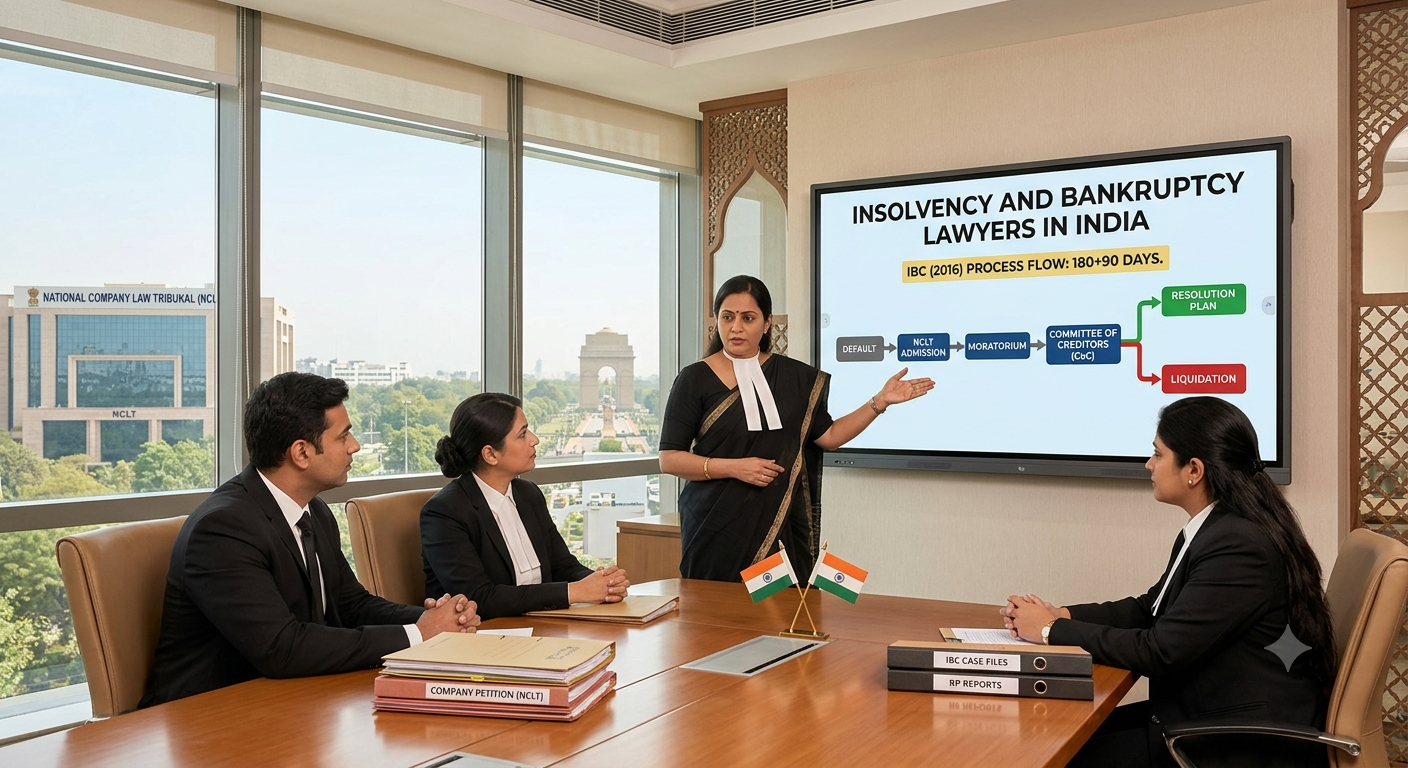
Insolvency in India was, for the better part of three decades, a species of delay. A company that could not pay registered itself sick, and the reference kept its creditors at bay for years while the assets wasted; a winding-up petition, once admitted, became a slow liquidation conducted by a court with a hundred other things before it. The Insolvency and Bankruptcy Code, 2016 was written to end that arrangement — to put in its place a time-bound, creditor-driven process, run by a licensed professional and supervised by a tribunal, in which the debtor’s management stands aside on the first day and the question is no longer whether the company can be kept alive but whether anyone will pay to keep it so.
The Code arrived as a skeleton and has been given its flesh by the courts. Almost every question that matters in practice — what a default is, when a dispute is real, what the moratorium touches, how far the committee of creditors may be second-guessed, what an approved plan extinguishes, and who may not bid for the company at all — has been settled, and in several instances resettled, by the Supreme Court since 2017. Innoventive fixed the trigger; Mobilox fixed the operational creditor’s gateway; Swiss Ribbons held the architecture constitutional; K. Sashidhar and Essar Steel placed the committee’s commercial judgment beyond review; Ghanashyam Mishra made the clean slate real. What follows reads these decisions together, as a single conversation between the courts and the creditors, debtors and professionals who work the Code.
“The defaulter’s paradise is lost” — the sentence with which the Court in Swiss Ribbons described what the Code had achieved, and the premise from which almost every decision since has proceeded.
One default engages at least seven distinct enquiries: admission, limitation, the moratorium, the authority of the committee of creditors, the plan and its finality, the eligibility of the bidder, and the separate track that runs against the personal guarantor. Each has its own gatekeeper and its own standard, and the practitioner’s first task is to know which enquiry a given set of facts opens.
The gateway — default, dispute, and the discretion to admit
The Adjudicating Authority is not trying the debt. It asks whether a default above the threshold has occurred and, where the applicant is an operational creditor, whether the debtor had raised a real dispute before the demand notice — and very little else.
THE GATEWAY · FROM DEFAULT TO ADMISSION
Sections 7, 9 and 10 — what the Adjudicating Authority must find before a corporate debtor is put into insolvency
|
Section 7 Financial creditor · default on a financial debt |
Section 9 Operational creditor · after a section 8 demand notice |
Section 10 Corporate applicant · self-initiated |
↓
Debt due, and a default of ₹1 crore or more?
|
YES ↓
Operational debt met by a pre-existing dispute? (s. 9)
|
NO →
Application rejected
s. 7(5)(b) / s. 9(5)(ii)(a) · no jurisdiction arises |
|
NO ↓
Admitted · CIRP commences
interim resolution professional appointed · moratorium under s. 14 · board suspended |
YES →
Application rejected
a plausible contention requiring investigation is enough |
|
DEBT AND DEFAULT, NOTHING MORE
Once default is established from the information utility or other evidence, the Authority must admit; the corporate debtor’s defences on the merits are irrelevant, and s. 238 overrides a State relief statute.Innoventive Industries v. ICICI Bank, (2018) 1 SCC 407 |
THE PLAUSIBLE DISPUTE
The Authority asks only whether the dispute is plausible and requires investigation — not whether it will succeed. A patently feeble legal argument is no dispute at all.Mobilox Innovations v. Kirusa Software, (2018) 1 SCC 353 |
A DISCRETION, NARROWLY READ
“May admit” in s. 7(5)(a) was read as conferring discretion in Vidarbha; that reading has since been confined to its own facts, and admission ordinarily follows proof of default.Vidarbha Industries, (2022) 8 SCC 352; M. Suresh Kumar Reddy, (2023) 8 SCC 387 |
| Authority | Ratio decidendi | Practice insight |
|---|---|---|
|
Innoventive Industries Ltd. v. ICICI Bank Ltd.
(2018) 1 SCC 407 · SC (2J) · s. 7; overriding effect of s. 238
|
On a Section 7 application the Authority need only satisfy itself that a default has occurred, from the records of an information utility or such other evidence as the financial creditor furnishes; the corporate debtor’s defences on the merits of the debt do not arise at that stage. Section 238 gives the Code overriding effect over a State statute suspending liabilities. | The admission hearing is not the trial. For the debtor the only real answers are that no debt is due, that no default has occurred, or that the application is incomplete or out of time. |
|
Mobilox Innovations Pvt. Ltd. v. Kirusa Software Pvt. Ltd.
(2018) 1 SCC 353 · SC (2J) · ss. 8, 9; existence of dispute
|
On a Section 9 application the Authority asks only whether there is a plausible contention requiring further investigation, not whether the dispute will succeed. A dispute must exist before receipt of the demand notice; a patently feeble legal argument, or an assertion unsupported by evidence, is no dispute at all. | Operational creditors should paper the pre-notice correspondence. Debtors should raise and record any dispute before the Section 8 notice arrives — one manufactured afterwards will not save them. |
|
Swiss Ribbons Pvt. Ltd. v. Union of India
(2019) 4 SCC 17 · SC (2J) · Constitutional validity
|
The Code is constitutionally valid in its entirety. The classification between financial and operational creditors is intelligible and rationally related to the object of the statute; the constitution of the committee of creditors from financial creditors alone, the withdrawal threshold under Section 12A, and Section 29A including its guarantor bar, are all upheld. | The provisions most often attacked are settled. A constitutional challenge to the architecture is now largely foreclosed; the argument must be about application, not validity. |
|
Vidarbha Industries Power Ltd. v. Axis Bank Ltd.
(2022) 8 SCC 352 · SC (2J) · s. 7(5)(a); “may admit”
|
The word “may” in Section 7(5)(a) confers a discretion; the Authority is not bound to admit a Section 7 application merely because a default is established, and may have regard to the corporate debtor’s overall financial position and the surrounding circumstances. | Cite with care. The reasoning was tied to a debtor holding a large realisable award, and has since been read down; it is a fact-driven plea, not a general defence. |
|
M. Suresh Kumar Reddy v. Canara Bank
(2023) 8 SCC 387 · SC (2J) · s. 7; Vidarbha confined
|
Where a debt and a default above the threshold are established, and the application is complete and within limitation, the Authority has no option but to admit it. Vidarbha was decided in the peculiar facts of that case and does not dilute Innoventive. | This is the answer to a Vidarbha defence. Unless the debtor can bring itself within comparable facts, proof of default ends the enquiry. |
Limitation and the stale debt
Section 238A applies the Limitation Act, and Article 137 gives the creditor three years from the date of default. Almost all of the litigation is about what restarts that clock, and what stops it.
THE LIMITATION CLOCK · SECTION 238A
When a creditor’s right to apply dies, when it revives, and when the clock is stopped
|
THE BASIC CLOCK B.K. Educational Services, (2019) 11 SCC 633 |
Date of default cause of action |
→ Three years → Art. 137, Limitation Act |
Application barred no power to condone |
|
THE RESET ARCIL v. Bishal Jaiswal, (2021) 6 SCC 366 |
Acknowledgment in writing signed, within 3 yrs |
→ Balance-sheet entry → s. 18 Limitation Act |
Fresh 3 years runs from entry / decree |
|
THE EXCLUSION Sesh Nath Singh, (2021) 7 SCC 313 |
Proceedings elsewhere SARFAESI / bona fide |
→ Time excluded → s. 14 Limitation Act |
No formal plea needed given on record material |
THE DATE OF DEFAULT MUST BE PLEADED: Limitation runs from the default stated in the application. A creditor cannot shift the date after filing, nor rely on the continuing nature of the debt to keep an otherwise dead claim alive.
Babulal Vardharji Gurjar v. Veer Gurjar Aluminium Industries, (2020) 15 SCC 1
Babulal Vardharji Gurjar v. Veer Gurjar Aluminium Industries, (2020) 15 SCC 1
| Authority | Ratio decidendi | Practice insight |
|---|---|---|
|
B.K. Educational Services Pvt. Ltd. v. Parag Gupta & Associates
(2019) 11 SCC 633 · SC (2J) · s. 238A; Article 137
|
The Limitation Act applies to applications under Sections 7 and 9 from the inception of the Code. Article 137 governs and time runs from the date of default; the Code is not a means of reviving debts already time-barred, and Section 238A is clarificatory of the position that always obtained. | Fix the default date before anything else. An application on a debt barred on the day of filing is not cured by pointing to a continuing entry in the books. |
|
Babulal Vardharji Gurjar v. Veer Gurjar Aluminium Industries Pvt. Ltd.
(2020) 15 SCC 1 · SC (3J) · Pleading the default
|
Limitation is reckoned from the date of default as pleaded in the application. A creditor cannot fall back on a different or later default, nor on the continuing nature of the default, to enlarge the period; an acknowledgment relied upon must be specifically pleaded and proved. | Plead the default date, the acknowledgment and any exclusion in Part IV of the application itself. A case constructed in rejoinder will usually fail. |
|
Asset Reconstruction Company (India) Ltd. v. Bishal Jaiswal
(2021) 6 SCC 366 · SC (3J) · s. 18, Limitation Act
|
An entry in the corporate debtor’s balance sheet may amount to an acknowledgment of liability under Section 18 of the Limitation Act and furnish a fresh period; whether it does so in a given case depends on the entry read together with any caveat in the directors’ report or the notes to the accounts. | Pull the audited accounts for every year since the default. The acknowledgment is often on the face of them — and as often qualified in a way that destroys it. |
|
Sesh Nath Singh v. Baidyabati Sheoraphuli Cooperative Bank Ltd.
(2021) 7 SCC 313 · SC (2J) · s. 14, Limitation Act
|
Section 14 of the Limitation Act applies to proceedings under the Code, and time spent bona fide prosecuting proceedings under the SARFAESI Act on the same cause may be excluded. A formal plea is not indispensable where the material on record makes out the ground. | A creditor that went first to SARFAESI is not necessarily out of time. Prove the dates and the bona fides of the earlier proceeding. |
|
Dena Bank (now Bank of Baroda) v. C. Shivakumar Reddy
(2021) 10 SCC 330 · SC (2J) · Acknowledgment; decree
|
Documents may be filed at any stage before a final order. An acknowledgment made before expiry — including a proposal for one-time settlement or an entry in the accounts — furnishes a fresh period, and a judgment, decree or recovery certificate gives rise to a fresh cause of action. | A recovery certificate revives an otherwise cold claim. Settlement correspondence cuts both ways: it may be the very acknowledgment that saves the application. |
The moratorium — what it freezes, and whom it does not protect
Section 14 exists to hold the corporate debtor together as a going concern while a plan is found. It is a shield for the company and its assets — not for the people who stood behind it.
| Authority | Ratio decidendi | Practice insight |
|---|---|---|
|
P. Mohanraj v. Shah Brothers Ispat Pvt. Ltd.
(2021) 6 SCC 258 · SC (3J) · s. 14; s. 138, NI Act
|
A proceeding under Section 138 of the Negotiable Instruments Act is quasi-criminal and falls within “proceedings” in Section 14(1)(a); it is therefore stayed as against the corporate debtor. The natural persons liable under Section 141 enjoy no such protection. | The moratorium buys the company a stay and the signatory nothing. Directors and guarantors should not assume the shelter travels to them. |
|
State Bank of India v. V. Ramakrishnan
(2018) 17 SCC 394 · SC (2J) · s. 14; personal guarantors
|
Section 14 operates only in respect of the corporate debtor; it does not extend to the personal guarantor, whose liability under Section 128 of the Contract Act is co-extensive and may be enforced during the corporate insolvency resolution process. | Proceed against the guarantor while the process runs. For the guarantor, the moratorium is not a reason to sit still. |
|
Alchemist Asset Reconstruction Co. Ltd. v. Hotel Gaudavan Pvt. Ltd.
(2018) 16 SCC 94 · SC (2J) · s. 14; arbitration
|
An arbitration instituted after the moratorium has come into effect is non est in law; the bar in Section 14(1)(a) operates upon the institution of a proceeding as much as upon its continuation. | Check the insolvency commencement date before invoking a clause. A reference begun after admission is a nullity, not merely suspended. |
|
Rajendra K. Bhutta v. Maharashtra Housing and Area Development Authority
(2020) 13 SCC 208 · SC (3J) · s. 14(1)(d)
|
Section 14(1)(d) bars the recovery of any property occupied by or in the possession of the corporate debtor by an owner or lessor. A statutory authority that terminates a joint development agreement and seeks to take over the land is caught by the bar. | Possession, not title, is the test. A landowner or development partner cannot use termination to retake the site during the moratorium. |
|
Indus Biotech Pvt. Ltd. v. Kotak India Venture (Offshore) Fund
(2021) 6 SCC 436 · SC (3J) · s. 7; s. 8, Arbitration Act
|
A Section 7 petition acquires its in rem character only upon admission. Until then an application under Section 8 of the Arbitration and Conciliation Act may be considered, and where the Authority finds no default it may reject the petition and allow the reference to proceed. | Timing decides everything. A Section 8 application filed before admission is live; once the petition is admitted, the arbitral window closes. |
The commercial wisdom of the committee of creditors
The Code hands the commercial decision to the financial creditors and gives the tribunal a compliance checklist. Nearly every appeal that fails, fails because it invites a court to make a business judgment.
| Authority | Ratio decidendi | Practice insight |
|---|---|---|
|
K. Sashidhar v. Indian Overseas Bank
(2019) 12 SCC 150 · SC (2J) · Commercial wisdom
|
The commercial wisdom of the committee of creditors in approving or rejecting a resolution plan is non-justiciable. Neither the Adjudicating Authority nor the Appellate Tribunal may enquire into the reasons for the vote, and a dissenting financial creditor is not required to record any. | Do the persuading in the committee room. Once the vote is taken, an appeal against the merits of the decision has nowhere to go. |
|
Committee of Creditors of Essar Steel India Ltd. v. Satish Kumar Gupta
(2020) 8 SCC 531 · SC (3J) · Distribution; judicial review
|
The committee’s discretion extends to the manner of distribution among and within classes of creditors, subject to Section 30(2); equitable treatment does not require equal payment to financial and operational, or secured and unsecured, creditors. Judicial review is confined to Section 30(2) compliance, and the outer limit of 330 days is directory. | The leading authority on both sides of a distribution challenge. The argument available is arbitrariness within a class — not the size of the haircut. |
|
Kalpraj Dharamshi v. Kotak Investment Advisors Ltd.
(2021) 10 SCC 401 · SC (2J) · Belated plans; judicial restraint
|
The committee may consider a resolution plan submitted after the stipulated date where doing so maximises value, and the Appellate Tribunal was not justified in interfering with that commercial decision. A party that participates in the process without protest cannot afterwards assail it. | Object contemporaneously and on the record. Acquiescence in the process is close to fatal on appeal. |
|
Jaypee Kensington Boulevard Apartments Welfare Association v. NBCC (India) Ltd.
(2022) 1 SCC 401 · SC (3J) · Scope of s. 31
|
The Adjudicating Authority may satisfy itself only that the plan meets the requirements of Section 30(2). It cannot modify a plan or direct alterations; its power is to approve the plan or to send it back for reconsideration. A dissenting financial creditor is entitled to its Section 30(2)(b) minimum, not to security. | There is no relief in asking a tribunal to improve a plan. Frame the objection as non-compliance with a specific limb of Section 30(2). |
|
Vallal RCK v. Siva Industries and Holdings Ltd.
(2022) 9 SCC 803 · SC (2J) · s. 12A withdrawal
|
Where the committee of creditors approves a settlement and withdrawal under Section 12A with the requisite ninety per cent voting share, neither the Adjudicating Authority nor the Appellate Tribunal may sit in appeal over that commercial decision. | A settlement carried at ninety per cent is effectively unassailable. Build the majority rather than the appeal. |
The plan, the clean slate and the waterfall
An approved plan is meant to be the end of the matter, and the Court has held it to that. What remains contested is which claims the slate wipes, and where the Crown stands in the queue.
| Authority | Ratio decidendi | Practice insight |
|---|---|---|
|
Ghanashyam Mishra & Sons Pvt. Ltd. v. Edelweiss Asset Reconstruction Co. Ltd.
(2021) 9 SCC 657 · SC (3J) · s. 31; the clean slate
|
On approval under Section 31 the plan binds the corporate debtor, its employees, members, creditors, guarantors and the Central and State Governments. All claims not forming part of the plan stand extinguished, and no proceeding may be initiated in respect of a claim relating to the period before approval; the 2019 amendment is clarificatory and operates retrospectively. | Run the claim-verification exercise exhaustively before approval, because anything left out is gone. For a successful applicant this is the provision that makes the price worth paying. |
|
Ebix Singapore Pvt. Ltd. v. Committee of Creditors of Educomp Solutions Ltd.
(2022) 2 SCC 401 · SC (3J) · Withdrawal and modification
|
A resolution plan submitted to, or approved by, the committee cannot be withdrawn or modified by the successful applicant on grounds of delay or changed commercial circumstances. The Code confers no equity jurisdiction to permit it, and an approved plan is not an ordinary contract governed by the Contract Act. | Price the delay risk into the plan itself, through express conditions and outer timelines. There is no exit afterwards. |
|
Pratap Technocrats Pvt. Ltd. v. Monitoring Committee of Reliance Infratel Ltd.
(2021) 10 SCC 623 · SC (2J) · No residual equity
|
The jurisdiction of the Adjudicating Authority is statutory and circumscribed by Sections 30(2) and 31. Once those requirements are met there is no residual equity jurisdiction to test a plan against the court’s own notions of fairness. | Fairness in the abstract is not a ground. Anchor every objection to a clause of Section 30(2). |
|
State Tax Officer v. Rainbow Papers Ltd.
(2023) 9 SCC 545 · SC (2J) · Government dues as secured debt
|
A statutory first charge created by a State value-added tax statute makes the State a secured creditor within Sections 3(30) and 3(31), and a resolution plan that ignores the dues of a secured creditor is liable to be rejected as non-compliant with Section 30(2). | Test every plan involving State tax arrears against the charging provision — and note that the reach of this decision has since been contested. |
|
Paschimanchal Vidyut Vitran Nigam Ltd. v. Raman Ispat Pvt. Ltd.
(2023) 10 SCC 60 · SC (2J) · The s. 53 waterfall
|
Rainbow Papers was rendered in the setting of a particular statutory scheme and did not consider Section 53. Government dues are ordinarily to be dealt with under Section 53(1)(e), and a statutory charge does not displace the waterfall. | Read the two decisions together and identify which statute creates the charge. The position for a given department is unsettled, and the point is worth taking either way. |
Section 29A — who may not buy the company back
Section 29A was written to keep the persons who ran a company into the ground from buying it back at a discount. The litigation has been about how far “connected” reaches, and at what date eligibility is tested.
| Authority | Ratio decidendi | Practice insight |
|---|---|---|
|
ArcelorMittal India Pvt. Ltd. v. Satish Kumar Gupta
(2019) 2 SCC 1 · SC (2J) · s. 29A(c); the meaning of control
|
Ineligibility under Section 29A(c) turns on the applicant’s management or control of a company whose account is non-performing. “Control” means de jure or de facto positive control over management or policy decisions, not a merely negative or blocking right. Eligibility is judged as at the date of submission of the plan, and overdues may be cleared before that date. | Map the applicant’s group and every non-performing account within it before bidding, and clear the overdues before submission — not afterwards. |
|
Bank of Baroda v. MBL Infrastructures Ltd.
(2022) 5 SCC 661 · SC (2J) · s. 29A(h); the guarantor bar
|
A promoter who has executed a guarantee in favour of a creditor of the corporate debtor, which has been invoked and remains unpaid, is ineligible under Section 29A(h). Its application to a process pending when the provision came into force is neither retrospective punishment nor arbitrary. | A promoter-guarantor is out unless the invoked guarantee is discharged. Where a plan has already been implemented a court may decline to unwind it — but do not plan on that. |
|
Phoenix ARC Pvt. Ltd. v. Spade Financial Services Ltd.
(2021) 3 SCC 475 · SC (3J) · Related parties; collusive debt
|
A creditor whose claim arises from a collusive transaction is not a financial creditor within Sections 5(7) and 5(8); and a related party — including one that ceases to be related in order to gain entry — is excluded from the committee of creditors under the first proviso to Section 21(2). | Interrogate the origin of every large related claim when the committee is constituted. Voting share obtained through a collusive debt taints everything downstream. |
|
Arun Kumar Jagatramka v. Jindal Steel and Power Ltd.
(2021) 7 SCC 474 · SC (2J) · s. 29A and s. 230 schemes
|
A person ineligible under Section 29A cannot propose a scheme of compromise or arrangement under Section 230 of the Companies Act, 2013 in respect of a company in liquidation under the Code; the disqualification cannot be evaded by changing the vehicle. | The back door in liquidation is shut as firmly as the front door in resolution. The eligibility question is asked of the person, not of the procedure. |
The perimeter — guarantors, avoidance, and the limits of the tribunal
The reach of the Code is wide but not unlimited. Part III brings the personal guarantor before the same tribunal, the avoidance provisions reach backwards into transactions the debtor would rather forget, and public-law grievances remain where they always were.
| Authority | Ratio decidendi | Practice insight |
|---|---|---|
|
Lalit Kumar Jain v. Union of India
(2021) 9 SCC 321 · SC (2J) · Part III; personal guarantors
|
The notification bringing Part III into force in relation to personal guarantors to corporate debtors is a valid exercise of the power under Section 1(3) and is not excessive delegation. Approval of the corporate debtor’s resolution plan does not by operation of law discharge the personal guarantor. | The guarantee survives the plan unless the plan and the contract of guarantee provide otherwise. Negotiate the release expressly if it is wanted. |
|
Dilip B. Jiwrajka v. Union of India
(2024) 5 SCC 435 · SC (3J) · ss. 95 to 100
|
Sections 95 to 100 are constitutionally valid. The resolution professional under Sections 97 and 99 performs a facilitative and recommendatory role and adjudicates nothing; the debtor’s right to be heard arises when the Adjudicating Authority applies its mind under Section 100, and the interim moratorium under Section 96 operates upon the debt. | Do not expect a hearing on the merits before the Section 100 stage — but engage closely with the professional’s enquiry, because the report frames everything that follows. |
|
Mahendra Kumar Jajodia v. State Bank of India
2022 SCC OnLine SC 1440 · SC (3J) · s. 60(2); forum
|
An application against a personal guarantor is maintainable before the National Company Law Tribunal even where no corporate insolvency resolution process or liquidation is pending against the corporate debtor; Section 60(2) is an enabling provision and does not cut down the jurisdiction conferred by Section 60(1). | A creditor need not first push the company into insolvency in order to reach the guarantor before the Tribunal. |
|
Anuj Jain, IRP for Jaypee Infratech Ltd. v. Axis Bank Ltd.
(2020) 8 SCC 401 · SC (2J) · s. 43; s. 5(8)
|
The enquiry under Section 43 is two-fold — whether the transfer is for an antecedent debt, and whether it falls within the relevant look-back period — and the exceptions in Section 43(3) are to be construed strictly. A mortgage created to secure the debt of a third party does not make the mortgagee a financial creditor of the mortgagor, there being no disbursement against the consideration for the time value of money. | Run the avoidance analysis early; the transactions are usually visible in the year before admission. And test every claimed financial debt against disbursement and time value. |
|
Embassy Property Developments Pvt. Ltd. v. State of Karnataka
(2020) 13 SCC 308 · SC (3J) · s. 60(5); public law
|
The Adjudicating Authority has no jurisdiction over a decision of a statutory authority taken in the exercise of a public-law function — there, the refusal to extend a mining lease — which is amenable to judicial review under Article 226. Section 60(5)(c) is not a source of jurisdiction over such questions. | Separate the contractual from the sovereign. A public-law grievance belongs in the writ court, not before the Tribunal. |
BOTTOM LINE
The Code has been read, consistently, as a commercial statute with a commercial purpose. The courts will admit on proof of default and decline to try the debt (Innoventive, M. Suresh Kumar Reddy), refuse to reopen the committee’s business judgment (K. Sashidhar, Essar Steel), hold a plan final once approved (Ebix, Pratap Technocrats), and give the successful applicant a clean slate (Ghanashyam Mishra). But the Code is not a collection instrument: a barred debt stays barred (B.K. Educational Services), a plausible pre-existing dispute defeats an operational creditor (Mobilox), the moratorium protects the company’s assets and not its promoters’ ambition to buy it back (ArcelorMittal, MBL Infrastructures), and a public-law grievance belongs in the writ court (Embassy Property). Speed and restraint, held in the same hand. For the practitioner the working lesson is that most outcomes are fixed long before the first hearing: the date of default, the pre-notice correspondence, the acknowledgment buried in the balance sheet and the applicant’s group structure decide more cases than argument at the bar.
The Code has been read, consistently, as a commercial statute with a commercial purpose. The courts will admit on proof of default and decline to try the debt (Innoventive, M. Suresh Kumar Reddy), refuse to reopen the committee’s business judgment (K. Sashidhar, Essar Steel), hold a plan final once approved (Ebix, Pratap Technocrats), and give the successful applicant a clean slate (Ghanashyam Mishra). But the Code is not a collection instrument: a barred debt stays barred (B.K. Educational Services), a plausible pre-existing dispute defeats an operational creditor (Mobilox), the moratorium protects the company’s assets and not its promoters’ ambition to buy it back (ArcelorMittal, MBL Infrastructures), and a public-law grievance belongs in the writ court (Embassy Property). Speed and restraint, held in the same hand. For the practitioner the working lesson is that most outcomes are fixed long before the first hearing: the date of default, the pre-notice correspondence, the acknowledgment buried in the balance sheet and the applicant’s group structure decide more cases than argument at the bar.
DISCLAIMER: This Case Law Insights is for information purpose only and should not be taken as legal advice. To know further details, clarification, assistance or any advice on the Insolvency and Bankruptcy Code, 2016 or any legal advice on corporate insolvency resolution/ liquidation/ personal guarantors/ avoidance transactions etc. or any legal issues on debt restructuring and creditor enforcement you may connect with us at admin@equicorplegal.com / 08448824659 and visit www.equicorplegal.com