Startup Deals: Key Legal Insights from Landmark Cases
Startup Deals: Key Legal Insights from Landmark Cases
A term sheet is a set of promises about the future of a company, and a financing is the moment those promises are written down. What none of them settles is the question that decides every dispute when a raise goes wrong: will an Indian court, tribunal or regulator actually enforce the clause as the parties meant it? The liquidation preference, the anti-dilution ratchet, the founder lock-in, the assured foreign exit, the drag and the veto are worth precisely what the law will give them, and not a rupee more. This casebook gathers the decisions that fix that value — the point at which each familiar clause of a venture financing has met an Indian court and been told what, in law, it is.
The authorities are old and new, and they run from the nature of a share to the arbitrability of an oppression petition. Sahara decides when a private placement is really a public offer; Rangaraj and Messer Holdings decide whether a transfer restriction that lives only in the shareholders’ agreement binds anyone; Dale & Carrington decides when a down-round becomes oppression; Percept D’Mark decides that the post-exit non-compete is void; NTT Docomo and Cruz City decide which foreign exit FEMA will permit; Booz Allen and Vidya Drolia decide what may be sent to arbitration when the deal breaks. What follows reads these decisions together, as a single conversation between the courts and the founders, investors and advisers who paper the raise.
Nothing in a term sheet is worth more than its enforceability under Indian law — the single proposition this casebook exists to prove, clause by clause and decision by decision.
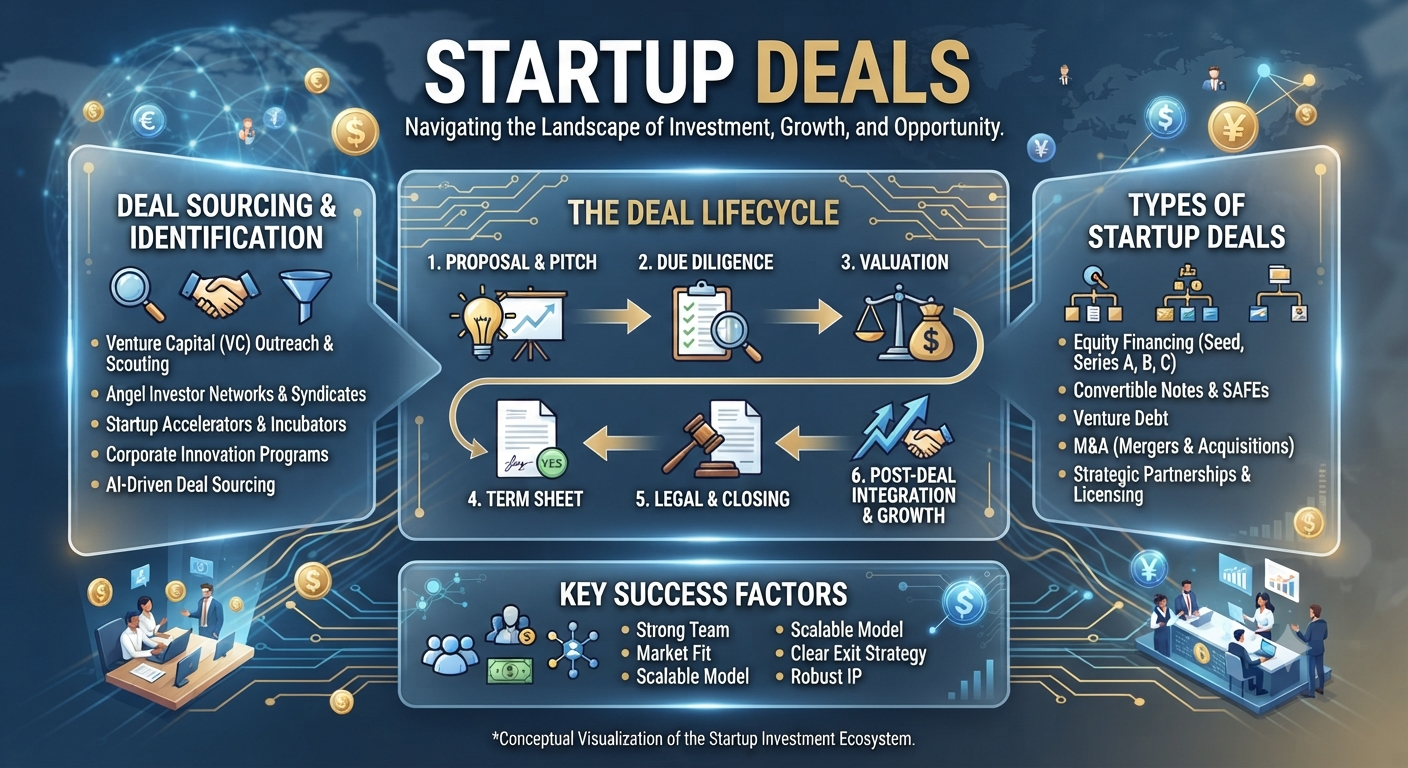
A financing runs through eight recurring questions: what a share actually is, whether a further issue is a legitimate raise or a dilution, whether the round is a private placement or a public offer, whether the rights you bargained for bind the company or only the parties, what holds a founder to the venture and what is void once he leaves, which foreign exit FEMA will permit, how a court reviews the price of an exit, and what may be arbitrated when the deal breaks. Each has its own gatekeeper and its own standard, and the practitioner’s first task is to know which question a given clause opens.
First principles — the company you are selling
Before a single term is negotiated it is worth remembering what changes hands. A share is not a slice of the company’s assets; it is a bundle of rights against a separate legal person, and almost every hard question in a raise flows from that first abstraction.
not a slice of the company’s assets — Bacha Guzdar
a right to dividends when, and only when, they are declared
a voice in the company’s decisions, in proportion to the holding
a share in the surplus on a winding up, after creditors
the statutory minority remedies, which no article may remove
A company is a distinct juristic person, and the veil is lifted only for fraud, sham, statutory command or public interest. An investor cannot, as a rule, reach the founder through the company.
A shareholder’s statutory rights — to requisition a meeting, to move a resolution — are exercisable as of right; and the moment foreign capital enters, exchange control becomes a silent party to the cap table.
A power to refuse registration of a transfer is fiduciary: it must be used bona fide and in the company’s interest. A consent right used to trap an investor will not be upheld.
| Authority | Ratio decidendi | Practice insight |
|---|---|---|
|
Bacha F. Guzdar v. Commissioner of Income-Tax, Bombay
AIR 1955 SC 74 : (1955) 1 SCR 876 · Supreme Court · Nature of a share
|
A share is a bundle of rights — to dividends when declared, to vote, and to a share in surplus on winding up — and not a proprietary interest in the company’s assets or its business. The character of the company’s income does not pass through to the shareholder. | This is why a founder’s equity, an investor’s preference shares and an ESOP option are all just contractual bundles of rights. When you negotiate a term sheet you are re-cutting that bundle — not carving up the company’s bank balance. |
|
Tata Engineering & Locomotive Co. Ltd. v. State of Bihar
AIR 1965 SC 40 · Supreme Court · Corporate veil
|
A company is in law a distinct juristic person; the veil between it and its members will be lifted only in defined situations (fraud, sham, statutory command, public interest), and not merely because it suits the corporators to be identified with the company. | Investors ask for personal founder covenants precisely because they cannot, as a rule, reach through the company to the founder. Know when the veil holds — and when a personal guarantee or indemnity is the only thing that actually binds the individual. |
|
Life Insurance Corporation of India v. Escorts Ltd.
(1986) 1 SCC 264 · Supreme Court · Members’ rights; foreign investment
|
A shareholder’s statutory rights — to requisition a meeting, to move a resolution — are exercisable as of right and need not be justified to the board; but those rights operate within, and are policed by, the exchange-control framework where foreign money is involved. | Two lessons for a cap table: statutory shareholder rights sit above the SHA and cannot be contracted away by the articles alone; and the moment foreign capital enters, exchange control is a silent party to every governance move. |
|
Bajaj Auto Ltd. v. N.K. Firodia
AIR 1971 SC 321 · Supreme Court · Refusal to register transfer
|
A power to refuse registration of a transfer is a fiduciary power: it must be exercised bona fide, in the interest of the company, and not arbitrarily or for a collateral purpose. The directors must act on relevant considerations and be able to show they did. | Founder-favourable transfer restrictions (rights of first refusal, board consent to transfers) are enforceable only if the discretion is exercised in good faith. A consent right used to trap an investor or block a legitimate exit will not survive scrutiny. |
Issuing shares — power, purpose and dilution
The power to issue capital is a fiduciary power. Used for a genuine need and offered fairly, a further issue is an ordinary financing; used to gain or entrench control, the same allotment is an act of oppression a tribunal will undo.
- A genuine and demonstrable need for capital
- A real board resolution, on a proper record
- A fair record date and adequate notice to members
- An offer made rateably to existing shareholders
- Contemporaneous valuation supporting the price
- An allotment whose dominant purpose is to gain or entrench control
- No genuine need for money, or manufactured urgency
- A selective allotment dressed as a rights issue
- Process defects — no real meeting, inadequate notice
- Effect that strengthens one bloc against another, however papered
Directors may make a further issue even though it incidentally keeps an outsider out, provided the dominant purpose is bona fide in the company’s interest and the shares are offered equitably to existing members.
An allotment made to gain or entrench control, without a genuine need for capital and without proper board process, is a breach of fiduciary duty and an act of oppression.
An allotment whose purpose and effect is to increase the controlling group’s holding and reduce the complainant’s, without fair justification, may be set aside; the CLB / NCLT has wide remedial power.
| Authority | Ratio decidendi | Practice insight |
|---|---|---|
|
Nanalal Zaver v. Bombay Life Assurance Co. Ltd.
AIR 1950 SC 172 : (1950) SCR 391 · Supreme Court · s. 105-C, Companies Act 1913 (further issue)
|
Directors may make a further issue of capital even though it has the incidental effect of keeping an outsider out, provided the dominant purpose is bona fide in the company’s interest and the new shares are offered equitably to existing members. Motive alone does not invalidate an otherwise proper issue. | The ancestor of the modern pre-emptive right in s. 62. If your round is a rights issue, the safe harbour is a genuine capital need and a rateable offer. The danger zone is a selective allotment dressed up as a raise. |
|
Needle Industries (India) Ltd. v. Needle Industries Newey (India) Holding Ltd.
(1981) 3 SCC 333 : AIR 1981 SC 1298 · Supreme Court · ss. 397–398 (oppression); rights issue
|
The test for a further issue is whether it was made solely for the benefit of the directors or the controlling group. An issue in the larger interest of the company is not struck down merely because it incidentally benefits those who control the board; but a rights issue timed to exploit a co-shareholder’s inability to subscribe edges toward oppression. | The case every diluting investor and every diluted founder should read. Process is everything: a real board resolution, a demonstrable capital need, a fair record date and notice. Manufacture urgency to catch a co-investor short, and you have built an oppression petition for them. |
|
Dale & Carrington Investment (P) Ltd. v. P.K. Prathapan
(2005) 1 SCC 212 : (2004) 122 Comp Cas 161 · Supreme Court · ss. 397–398; s. 81 (further issue)
|
An allotment made to gain or entrench control, without a genuine need for capital and without proper board process, is a breach of the directors’ fiduciary duty and an act of oppression. Directorial power over share capital must satisfy not only good faith but the proper-purpose doctrine; the wrongdoer cannot be permitted to buy out the wronged. | This is the modern high-water mark against stealth dilution. Any allotment that shifts control must survive three questions: was there a real need for money, was the board process clean, and was it offered consistently with the cap-table bargain? Fail any one and the allotment is voidable. |
|
Sangramsinh P. Gaekwad v. Shantadevi P. Gaekwad
(2005) 11 SCC 314 : (2005) 123 Comp Cas 566 · Supreme Court · ss. 397–398, 402
|
Every allotment is not oppression; the petitioner must show conduct that is burdensome, harsh and lacking in probity, judged against the member’s proprietary rights. But directors owe fiduciary duties in issuing capital, and an issue engineered to alter the balance of control without commercial justification will be undone. | The judgment maps the whole terrain between a legitimate down-round dilution and an oppressive one. Keep the contemporaneous record — valuation, need, board minutes — that shows which side of the line your issue sits on. |
|
Shanti Prasad Jain v. Kalinga Tubes Ltd.
AIR 1965 SC 1535 · Supreme Court · ss. 397–398
|
Oppression must be burdensome, harsh and wrongful, and must involve a lack of probity or fair dealing towards a member in his capacity as such; mere loss of confidence between majority and minority is not enough. A shareholders’ arrangement never carried into the articles does not bind the company. | Two founding lessons in one case: the bar for an oppression claim is high, and a governance promise that stays in the SHA and never reaches the articles may be worth very little when it matters most. |
|
Kamal Kumar Dutta v. Ruby General Hospital Ltd.
(2006) 7 SCC 613 · Supreme Court · ss. 397–398
|
An allotment whose purpose and effect is to increase the controlling group’s shareholding and reduce that of the complaining members, without fair justification, is an act of oppression and may be set aside; the CLB (now NCLT) has wide power to undo it and restore the status quo. | Reinforces that the tribunal will look at effect, not just form. A ‘financing’ whose only real consequence is to strengthen one bloc against another is vulnerable — however carefully papered. |
|
Hanuman Prasad Bagri v. Bagress Cereals (P) Ltd.
(2001) 4 SCC 420 · Supreme Court · ss. 397–398, 433
|
To succeed, the petitioner must make out a case of continuous oppressive conduct up to the date of the petition, such that winding up on just and equitable grounds would be justified but would unfairly prejudice the members — the very foundation for granting relief short of winding up. | Sets the evidentiary threshold. A single grievance about one round will rarely qualify; a pattern of conduct will. Investors negotiating protective provisions should aim to make breaches demonstrable and continuing, not one-off. |
|
M.S. Madhusoodhanan v. Kerala Kaumudi (P) Ltd.
(2004) 9 SCC 204 · Supreme Court · Transfer of shares; family arrangement
|
A specific, concluded arrangement dealing with identified shares among identified parties can be enforced between them; the Court distinguished such a concrete agreement from the kind of open-ended restriction on transferability that offends the free-transfer principle. | A useful counterweight to Rangaraj: precise, bargained share arrangements between named parties are more defensible than blanket fetters. Draft investor rights with that specificity. |
|
Rajahmundry Electric Supply Corpn. Ltd. v. A. Nageswara Rao
AIR 1956 SC 213 · Supreme Court · s. 153-C, Companies Act 1913 (oppression)
|
The oppression-and-mismanagement jurisdiction protects members against those in control who conduct the company’s affairs prejudicially; qualifying members may invoke it, and the court has wide power to bring the wrongful conduct to an end and to regulate the company’s future affairs. | The earliest architecture of the minority-protection remedy your investors will one day rely on. It confirms the tribunal’s powers are broad and forward-looking – useful leverage for a squeezed founder or a minority investor alike. |
Public money and private placement — the line you cannot cross
The most consequential fund-raising question in Indian law is whether your round is, in substance, an offer to the public. The label on the document does not decide it; the number of offerees and the structure of the promise do.
to raise money — whatever you choose to call the round
listing and prospectus norms apply
SEBI or RBI registration
a genuine, bounded offer to identified persons — the only safe harbour
An offer to the threshold number of persons is deemed a public offer whatever the issuer calls it; the “private placement” label is worthless if the numbers say otherwise, and the refund consequences are severe.
Where money is pooled from investors expecting profit from the promoter’s management, the arrangement is a collective investment scheme whatever asset sits underneath — revenue-share, fractional or tokenised structures included.
A deposit is money received with an obligation to repay; the moment repayable money is taken from the public, the RBI’s deposit-protection regime is engaged.
| Authority | Ratio decidendi | Practice insight |
|---|---|---|
|
Sahara India Real Estate Corpn. Ltd. v. SEBI
(2012) 10 SCC 603 : (2012) 174 Comp Cas 154 · Supreme Court · s. 67(3), Companies Act 1956 (now ss. 23, 25, 42, 2013 Act)
|
An offer of securities to fifty persons or more (the threshold is now two hundred under the 2013 Act) is deemed to be an offer to the public, whatever the issuer chooses to call it; the character of the offer is decided by its substance and reach, not its label. A hybrid instrument bearing the name ‘debenture’ remains a security, and SEBI’s investor-protection jurisdiction follows the public. | The single most important fund-raising decision in modern Indian law. Count your offerees in every financial year. The ‘private placement’ label is worthless if the numbers say otherwise, and the consequences — refund with interest, market bans — are severe and personal. |
|
Subrata Roy Sahara v. Union of India
(2014) 8 SCC 470 · Supreme Court · Enforcement; contempt
|
Orders directing refund of monies unlawfully mobilised from the public will be enforced with the full coercive power of the Court, including against the individuals in control; the corporate form is no shield where the public has been deprived of its money. | The sequel to Sahara, and the answer to anyone who thinks a mis-structured public raise is a civil inconvenience. It is not. Personal liberty was on the line. |
|
PGF Ltd. v. Union of India
(2013) 13 SCC 340 · Supreme Court · s. 11AA, SEBI Act 1992
|
Where money is pooled from investors with the expectation of profit generated by the promoter’s management of the scheme, the arrangement is a collective investment scheme under s. 11AA, whatever asset sits underneath it; the constitutional validity of s. 11AA and SEBI’s regulatory reach were upheld. | A warning for creative structures — revenue-share, fractional assets, tokenised ownership. If you pool the public’s money and promise managed returns, you may have built a CIS, and a registration you never contemplated. |
|
N. Narayanan v. Adjudicating Officer, SEBI
(2013) 12 SCC 152 · Supreme Court · SEBI Act; PFUTP Regulations
|
Directors who lend their names to accounts they know or ought to know are false, and on the strength of which the company raises money or the market is misled, are personally liable; the fiduciary duty of a director extends to the integrity of the disclosures on which investors rely. | Diligence on the numbers is not just the investor’s job. A director who signs off on a raise built on dressed-up figures owns the consequences personally — a point worth making to every founder-director before a growth round. |
|
SEBI v. Kanaiyalal Baldevbhai Patel
(2017) 15 SCC 1 · Supreme Court · PFUTP Regulations; ‘fraud’
|
To establish fraud under the PFUTP framework, an element of inducement — conduct that leads another to act to his detriment — must be shown; the definition is wide, but it is not satisfied by mere irregularity absent that inducing quality. | Relevant to any raise involving public securities or secondary sales: the line between aggressive salesmanship and actionable inducement is a legal one, and your marketing of a security lives on the wrong side of it more easily than you think. |
|
SEBI v. Rakhi Trading (P) Ltd.
(2018) 13 SCC 753 · Supreme Court · PFUTP; standard of proof
|
Fraud and manipulation in the securities market are established on the preponderance of probabilities, not the criminal standard; a pattern of reversing, non-genuine trades can itself evidence manipulation even without direct proof of intent. | For anyone whose cap table touches a listed entity or a pre-IPO secondary: the evidentiary bar for the regulator is lower than founders assume, and inference from trading patterns is enough. |
|
Peerless General Finance & Investment Co. Ltd. v. Reserve Bank of India
(1992) 2 SCC 343 : AIR 1992 SC 1033 · Supreme Court · ss. 45-I to 45-L, RBI Act 1934
|
A deposit is a sum received with a corresponding obligation to repay; the RBI has statutory power to issue directions on any matter connected with the receipt of deposits – including how the money is held and disclosed – to secure repayment to depositors. The directions are valid and not an unreasonable restraint on business. | The frontier case for any raise that looks like taking public deposits – revenue-based financing, deposit schemes, chit-like products. The moment you accept repayable money from the public, the RBI’s deposit regime and the Companies Act deposit rules (ss. 73-76) are in play. |
The shareholders’ agreement versus the articles
A right you negotiate is worth what the law will enforce, and where it lives decides that. A restriction embedded in the articles binds the company; one left in the shareholders’ agreement may be no more than a claim in damages.
- A transfer restriction, ROFR or lock-in not carried into the articles does not bind the company
- A governance promise that never reaches the articles may be worth little when it matters
- A veto or reserved matter left in the contract is a claim in damages, not a bar to the act
- Enforceable between the parties as a contract — but not against the company or a third party
- A restriction embedded in the articles binds the company and every member
- A consensual pre-emption or ROFR among shareholders is valid and enforceable
- A precise, bargained arrangement over identified shares is enforceable between named parties
- The critical protective terms should be mirrored from the SHA into the articles at closing
A restriction on the transfer of shares that is not in the articles is not binding on the company or the shareholders; only restrictions in the articles bind. What matters must be embedded, not left to live in the SHA alone.
Free transferability under s. 111A bars an embargo imposed by the company; it does not stop shareholders binding themselves inter se by a consensual ROFR. The doubt cast by Western Maharashtra was corrected.
A specific, concluded arrangement over identified shares among named parties is enforceable between them, and is more defensible than an open-ended restriction on transferability.
| Authority | Ratio decidendi | Practice insight |
|---|---|---|
|
V.B. Rangaraj v. V.B. Gopalakrishnan
(1992) 1 SCC 160 : AIR 1992 SC 453 · Supreme Court · Transfer of shares; articles
|
A restriction on the transfer of shares that is not contained in the articles of association is not binding, either on the company or on the shareholders; the only restrictions that bind are those in the articles. | The rule that launched a thousand closing checklists. If a transfer restriction, ROFR or lock-in matters to you, it must be embedded in the articles — not left to live only in the SHA. A promise in the SHA alone may sound in damages, but it will not stop the transfer. |
|
Western Maharashtra Development Corpn. Ltd. v. Bajaj Auto Ltd.
(2010) 154 Comp Cas 593 (Bom) · Bombay High Court (Single Judge) · s. 111A, Companies Act 1956
|
The words ‘freely transferable’ in s. 111A reflect a legislative intent that shares of a public company move without restriction; a contractual right of pre-emption over such shares is, on this view, illegal and unenforceable. | For a few months this decision cast doubt on ROFR and pre-emption in every public-company deal in the country. Its logic still lurks whenever a portfolio company converts to public status — watch the moment your restrictions may lose their footing. |
|
Messer Holdings Ltd. v. Shyam Madanmohan Ruia
Bombay High Court (Division Bench), Appeal No. 855 of 2003, decided 1 September 2010 : (2010) 159 Comp Cas 29 (Bom) · s. 111A, Companies Act 1956
|
Free transferability under s. 111A means shares are not subject to an embargo imposed by the company; it does not bar shareholders from voluntarily binding themselves inter se by a consensual arrangement such as a right of first refusal. Such a private bargain does not need to be in the articles to bind its parties, and does not offend s. 111A. | The course-correction the market needed. Pre-emption and ROFR between shareholders are valid as contracts between them. But note the limit: they bind the parties, not necessarily the company or an innocent transferee — for that, back to the articles (Rangaraj). |
|
Bajaj Auto Ltd. v. Western Maharashtra Development Corpn. Ltd.
Bombay High Court (Division Bench), decided May 2015 · s. 111A
|
Overturning the single judge, the Division Bench held that a consensual pre-emption arrangement among shareholders of a public company is valid and does not violate s. 111A, aligning the position with Messer Holdings. | The question is now settled at High Court level: shareholder-to-shareholder transfer restrictions are enforceable as contracts. Draft them clearly, and still mirror the critical ones into the articles for reach beyond the signatories. |
|
World Phone India Pvt. Ltd. v. WPI Group Inc., USA
2013 SCC OnLine Del 1098 : (2013) 178 Comp Cas 173 (Del) · Affirmative-vote / veto rights
|
An affirmative-voting or veto right conferred by a shareholders’ agreement but absent from the articles of association is not enforceable against the company; to bind the company, such a control right must find its place in the articles. | Applies Rangaraj to control terms, not just transfer terms. Your investor vetoes, reserved matters and board-consent rights are only as good as the articles. Amend the articles at closing, or your ‘control’ is contractual air. |
|
Mannalal Khetan v. Kedar Nath Khetan
(1977) 2 SCC 424 · Supreme Court · s. 108, Companies Act 1956
|
The statutory command that a company shall not register a transfer except on a proper instrument of transfer is mandatory; the negative, prohibitory language admits of no exception, and a transfer effected in breach is ineffective. | Closing mechanics matter. A share transfer that skips the prescribed instrument and process is not merely irregular — it does not transfer title. Get the SH-4s, board approvals and register entries right, every time. |
Founder covenants — lock-in and non-compete
Investors buy founder commitment, but the Contract Act limits how it may be bought. A restraint that operates during the venture is enforceable; a non-compete that bites after the founder leaves is void, however reasonable it looks.
a restraint that protects the business — exclusive service, confidentiality, non-solicitation — is enforceable
a covenant in restraint of trade is void under s. 27 of the Contract Act, however reasonable it may appear
A negative covenant operating during the term of employment — requiring exclusive service — is not a restraint of trade and is enforceable; the doctrine bites only on post-term restrictions.
A covenant restraining a person from competing after employment ends is void under s. 27 of the Contract Act; reasonableness is no answer, and the court will not enforce it or grant an injunction.
Founder retention is better secured by vesting, share lock-in and garden-leave than by a post-exit non-compete. Confidentiality and non-solicitation survive; a naked restraint does not.
| Authority | Ratio decidendi | Practice insight |
|---|---|---|
|
Niranjan Shankar Golikari v. Century Spinning & Mfg. Co. Ltd.
AIR 1967 SC 1098 : (1967) 2 SCR 378 · Supreme Court · s. 27, Indian Contract Act 1872
|
A negative covenant that operates during the subsistence of the contract of employment, and is reasonable and necessary to protect the employer’s legitimate interests, is not a restraint of trade and is enforceable; the mischief of s. 27 is directed at post-term restraints. | Founder lock-ins and exclusivity that operate while the founder is engaged with the company are enforceable. This is the doctrinal home of the vesting cliff and the full-time-commitment covenant. |
|
Superintendence Company of India (P) Ltd. v. Krishan Murgai
(1981) 2 SCC 246 : AIR 1980 SC 1717 · Supreme Court · s. 27
|
A covenant that restrains an employee from carrying on a trade or profession after the employment has ended is, save for the narrow protection of trade secrets and goodwill on sale, void under s. 27 as a restraint of trade; Indian law does not admit the English ‘reasonableness’ escape for post-term restraints. | The reason a founder non-compete that bites after exit is usually unenforceable. If protecting the business post-exit matters, reach for confidentiality, IP assignment and non-solicit of specific relationships — not a blanket non-compete. |
|
Gujarat Bottling Co. Ltd. v. Coca Cola Co.
(1995) 5 SCC 545 · Supreme Court · s. 27
|
A negative stipulation operating during the subsistence of a commercial contract, designed to advance the trade the contract contemplates rather than to restrain it, does not offend s. 27; restraints that facilitate rather than fetter trade are permissible while the contract lives. | Extends Golikari from employment to commercial deals — relevant to exclusivity, tie-in and channel covenants in strategic-investor and JV rounds. The covenant must live and die with the contract. |
|
Percept D’Mark (India) (P) Ltd. v. Zaheer Khan
(2006) 4 SCC 227 · Supreme Court · s. 27
|
A restrictive covenant that extends beyond the term of the contract is void and unenforceable under s. 27; the doctrine of restraint of trade does not apply during the term but bites the moment the contract ends. A right of first refusal cannot be used to achieve a post-term restraint by another name. | The cleanest modern statement of the rule. It also warns that dressing a post-term restraint as a ‘first refusal’ or ‘exclusive negotiation’ right will not save it. Founder and key-person covenants must expire with the engagement. |
|
Mahindra & Mahindra Ltd. v. Union of India
(1979) 2 SCC 529 · Supreme Court · s. 27; restraint reasonableness
|
Restraints on trade are examined not only for reasonableness between the parties but for their effect on the freedom of trade generally; a covenant that unreasonably shackles trade will not be upheld merely because the parties agreed to it. | A reminder that even a bargained covenant answers to a public-interest overlay. Over-broad exclusivity extracted from a founder can fail on this ground quite apart from s. 27’s post-term rule. |
|
VFS Global Services (P) Ltd. v. Suprit Roy
(2008) 2 Bom CR 446 · Bombay High Court · s. 27; garden leave
|
A restraint that operates after the cessation of employment — including a garden-leave restriction that keeps the employee out of the market post-termination — falls foul of s. 27 and is unenforceable; the protectable interest must be pursued through legitimate confidentiality and non-solicit terms instead. | Directly relevant to key-person clauses in Indian venture deals. If your term sheet ‘benches’ a founder after exit, expect it to fail. Structure retention through vesting and equity forfeiture, which operate during the relationship. |
Foreign money — FEMA, pricing and the assured exit
Foreign capital brings a silent third party to the cap table. A genuine exit at fair value is enforceable; an assured or guaranteed return on equity is not, because FEMA will not let equity behave like debt.
a put option against the Indian promoter or company
equity may not carry an assured return
priced per the pricing guidelines — permissible, and enforceable
A put option exercisable at fair value is enforceable and its foreign award will be honoured; what FEMA forbids is a guaranteed or assured return on equity, which converts the instrument into disguised debt.
At enforcement of a foreign award, public policy bears its narrow meaning; there is no review of the merits, and a mere breach of Indian law does not by itself bar enforcement.
Draft the put at fair market value determined per the pricing guidelines, not at a fixed IRR. A fixed-return exit is unenforceable against a resident and may itself be a FEMA contravention.
| Authority | Ratio decidendi | Practice insight |
|---|---|---|
|
NTT Docomo Inc. v. Tata Sons Ltd.
2017 SCC OnLine Del 8078 · Delhi HC · FEMA 1999; enforcement of foreign award
|
A downside-protection put — an obligation to buy out at the higher of fair value or a floor — is a risk allocation, not a prohibited assured return; and a contravention of FEMA does not, of itself, make enforcement of a foreign award contrary to the fundamental policy of Indian law. The RBI has no standing to prevent enforcement of an award between two private parties. | The template for a FEMA-robust exit. Do not promise a fixed IRR to a foreign investor. Structure the exit as fair-value-floor protection plus contractual remedies for breach — a shape the courts will enforce and the RBI cannot simply block. |
|
Cruz City 1 Mauritius Holdings v. Unitech Ltd.
Delhi High Court, judgment dated 11 April 2017 (Ex. P. 132/2014) : (2017) 239 DLT 649 · FEMA 1999; public policy
|
A violation of FEMA does not amount to a breach of the fundamental policy of Indian law such as to defeat enforcement of a foreign award; the award is enforceable, though any consequent remittance abroad must still pass through the RBI’s permission under FEMA. The public-policy exception is narrow and does not swallow every provision of Indian law. | Read with Docomo, the message is settled: FEMA is a remittance gate, not an enforcement bar. Foreign investors can win and enforce; the money then queues for RBI clearance. Price your exit within fair value and you clear both hurdles. |
|
Shri Lal Mahal Ltd. v. Progetto Grano SpA
(2014) 2 SCC 433 · Supreme Court · s. 48, Arbitration & Conciliation Act 1996
|
At the enforcement stage of a foreign award, ‘public policy’ is construed narrowly — fundamental policy of Indian law, the interests of India, or justice or morality — and does not permit a review of the merits or a ‘patent illegality’ inquiry. The enforcing court is not a court of appeal. | The doctrinal backbone of Docomo and Cruz City. It is why a foreign investor’s negotiated exit, once in an award, is hard to unwind in India — and why founders should treat foreign-seated arbitration clauses with real respect. |
|
Associate Builders v. Delhi Development Authority
(2015) 3 SCC 49 · Supreme Court · s. 34, Arbitration & Conciliation Act 1996
|
An award may be set aside only within narrow limits: contravention of the fundamental policy of Indian law, of the interest of India, of justice or morality, or (for domestic awards) patent illegality going to the root; the court does not sit in appeal over the arbitrator’s appreciation of evidence. | Sets the ceiling on how far a disgruntled party can attack an award arising out of a financing dispute. For deal parties, it underscores that a well-drafted arbitration clause makes the negotiated outcome durable. |
Valuation, open offers and the price of exit
When the price of an exit is challenged, the court reviews the method and the disclosure, not the arithmetic. A valuation honestly reached by a recognised method will stand; a want of disclosure, or a fraud on the minority, will not.
- Sit in appeal over a valuation arrived at by a recognised and honestly applied method
- Substitute its own figure for the valuer’s where the method is sound
- Reopen a scheme sanctioned by the requisite majority merely because a member dissents
- Second-guess a commercial judgment reached fairly and on disclosure
- Whether the valuation method was recognised, and honestly and consistently applied
- Whether full and fair disclosure was made to those who voted
- Whether the open-offer and delisting price protects the public shareholder
- Whether the scheme is a fraud on the minority or on the law
A court will not sit in appeal over a valuation reached by a recognised method honestly applied; the enquiry is into the method and the disclosure, not the arithmetic.
In an open offer, delisting or buy-back, the price must be arrived at fairly and on the prescribed basis so that the exiting public shareholder is protected; the regulator’s role is to secure that fairness.
A scheme carried by the requisite majority on full disclosure will not be reopened at a dissenter’s instance; but a want of disclosure, or a triable allegation of fraud, keeps the question open.
| Authority | Ratio decidendi | Practice insight |
|---|---|---|
|
Miheer H. Mafatlal v. Mafatlal Industries Ltd.
(1997) 1 SCC 579 : AIR 1997 SC 506 · Supreme Court · ss. 391–394, Companies Act 1956
|
The company court’s role in sanctioning a scheme is supervisory, not appellate; it ensures statutory compliance, fair disclosure and that the scheme is one a reasonable body of members could approve — but it does not sit in judgment over the commercial wisdom or the exchange ratio the requisite majority has accepted. The court is ‘an umpire’, not a player. | The governing statement on merger valuations and schemes (now under ss. 230–232). A fair process and a defensible valuer’s report largely insulate the deal price; challenges to the number itself rarely succeed. |
|
Hindustan Lever Employees’ Union v. Hindustan Lever Ltd.
1995 Supp (3) SCC 499 : AIR 1995 SC 470 · Supreme Court · ss. 391–394
|
A valuation arrived at by a recognised method and by competent valuers will not be disturbed merely because another method might yield a different figure; the court intervenes only where the valuation is shown to be unfair, unreasonable or founded on a fundamentally wrong approach. | Reinforces judicial deference to valuation done properly. For deal parties, the lesson is to commission a methodologically sound, well-documented valuation — that, more than the number, is what survives challenge. |
|
Ramesh B. Desai v. Bipin Vadilal Mehta
(2006) 5 SCC 638 : AIR 2006 SC 3672 · Supreme Court · ss. 100–104 (reduction of capital)
|
A reduction of capital is a domestic matter for the company to decide by special resolution, subject to the court’s supervisory confirmation that it is fair and equitable to all classes and that creditors are protected; the court confirms rather than authors the commercial decision. | Relevant to down-round clean-ups, capital returns and squeeze-outs by selective reduction. The mechanism is powerful but policed: fairness across classes and creditor protection are the price of the court’s confirmation. |
|
Clariant International Ltd. v. SEBI
(2004) 8 SCC 524 : AIR 2004 SC 4236 · Supreme Court · SEBI Takeover Regulations
|
The provisions fixing the open-offer price under the Takeover Code are mandatory and protective of the ordinary shareholder; where the offer is delayed, shareholders are entitled to interest by way of compensation for being deprived of their money and the exit it represented. | For any portfolio company heading toward a listing or a change of control, the takeover price and timing rules are not negotiable, and delay carries a compensatory price. Build the open-offer mechanics into exit planning early. |
|
Swedish Match AB v. SEBI
(2004) 11 SCC 641 · Supreme Court · SEBI Takeover Regulations
|
The obligation to make an open offer on an acquisition of control is designed to give public shareholders an exit on terms no worse than those enjoyed by the outgoing controllers; the acquirer cannot structure around the substance of a control change to defeat that right. | A structural-substance warning for deals that shift control indirectly. Regulators and courts look to who really acquires control, not merely to the form of the share movement. |
|
G.L. Sultania v. SEBI
(2007) 5 SCC 133 · Supreme Court · SEBI Takeover Regulations
|
Valuation is a question of fact and expert judgment; a court or tribunal will not substitute its own figure for the valuer’s unless the valuation is shown to be based on a demonstrably wrong method, irrelevant material or a patent error. Honest professional judgment, soundly applied, is not reviewable merely because it is debatable. | The clearest statement that the process and method of valuation matter more than the result. Whether pricing a preferential allotment to a foreign investor or an open offer, a rigorous valuer’s report is your best protection. |
|
Daiichi Sankyo Co. Ltd. v. Jayaram Chigurupati
(2010) 7 SCC 449 · Supreme Court · SEBI Takeover Regulations
|
‘Persons acting in concert’ requires a shared common objective or purpose to acquire control, and a meeting of minds directed to that end; the status is not established merely by a relationship or a coincidence of interest without that concerted purpose at the relevant time. | Matters wherever co-investors, affiliates or a syndicate act together on a cap table near control. Whether your group is ‘acting in concert’ can decide if an open offer — and its price — is triggered. |
|
Bhagwati Developers (P) Ltd. v. Peerless General Finance & Investment Co. Ltd.
(2005) 6 SCC 718 · Supreme Court · Bonus shares; capitalisation of reserves
|
Whether a particular reserve may be capitalised for a bonus issue turns on the company’s articles and the character of the reserve; where the articles permit and the reserve is available for capitalisation, the bonus issue is valid, and a shareholder cannot restrain it merely because the reserve arose on revaluation. | Bonus issues, sweat equity and capitalisation of reserves all depend on where the value sits and what the articles allow. Before papering a bonus or a cap-table clean-up, check the article authority and the character of the reserve you are drawing on. |
When deals break — arbitrability and enforcement
Not every dispute in a broken financing can be arbitrated. A contractual claim between the parties goes to the tribunal the contract chose; an oppression petition, and the rights it protects, belong to the NCLT.
the SHA carries an arbitration clause
ss. 241–242 go to the NCLT
a contractual claim between the parties is sent to arbitration under s. 8
Disputes over rights in personam are arbitrable; those over rights in rem, and matters reserved to a tribunal such as oppression and mismanagement, are not. An oppression petition cannot be forced into arbitration.
A court will not refuse reference merely because a party frames a contractual claim as oppression; but a genuine ss. 241–242 petition, and a suit that cannot be bifurcated, stay with the court.
Even a claim touching statutory rights — IP, or a contractual dispute among the parties — is arbitrable where it is in substance a right in personam between them; when in doubt, the court refers.
| Authority | Ratio decidendi | Practice insight |
|---|---|---|
|
Booz Allen & Hamilton Inc. v. SBI Home Finance Ltd.
(2011) 5 SCC 532 · Supreme Court · Arbitration & Conciliation Act 1996
|
Rights in personam — arising from and enforceable against a determinate person — are generally arbitrable; rights in rem, which are enforceable against the world and often reserved to public fora, are not. Disputes involving the latter (or requiring adjudication reserved by statute to a court or tribunal) fall outside arbitration. | The master key to whether your SHA arbitration clause actually captures a given fight. Contractual claims between the parties: arbitrable. Claims that seek relief against the company or the world, or invoke a statutory tribunal’s exclusive jurisdiction: not. |
|
Haryana Telecom Ltd. v. Sterlite Industries (India) Ltd.
(1999) 5 SCC 688 · Supreme Court · Arbitration; winding up
|
A petition for winding up seeks a remedy — the dissolution of the company — that only the court can grant; such relief cannot be the subject of arbitration, whatever the arbitration clause says. | A boundary line for distressed cap tables. Threaten or face a winding-up or insolvency proceeding, and the arbitration clause you relied on falls away for that relief. |
|
Sukanya Holdings (P) Ltd. v. Jayesh H. Pandya
(2003) 5 SCC 531 · Supreme Court · s. 8, Arbitration & Conciliation Act 1996
|
A court cannot bifurcate the subject-matter of a suit, referring the arbitrable part to arbitration and retaining the rest; where the cause of action and parties are intertwined and not all are bound by the arbitration agreement, the whole dispute stays in court. | Why a well-drafted deal keeps all parties within one arbitration agreement. Leave a key party or a linked claim outside it, and a claimant can anchor the whole dispute in court and defeat your clause. |
|
Rakesh Malhotra v. Rajinder Kumar Malhotra
2014 SCC OnLine Bom 1146 : (2015) 2 Comp LJ 288 (Bom) · Bombay High Court · ss. 397–398 (now 241–242)
|
Petitions genuinely seeking relief against oppression and mismanagement invoke the tribunal’s wide, in rem powers and are not arbitrable; but a petition that is mala fide, vexatious or merely ‘dressed up’ as oppression to escape an arbitration clause can be seen through and the parties held to arbitration. | Cuts both ways. A real oppression claim cannot be buried in arbitration — good for a squeezed minority. But you cannot manufacture an oppression petition to dodge a bargained arbitration clause; the court will call the bluff. |
|
Vidya Drolia v. Durga Trading Corpn.
(2021) 2 SCC 1 · Supreme Court · Arbitrability framework
|
A dispute is non-arbitrable when the cause of action or subject-matter operates in rem; affects third-party rights and requires centralised adjudication; concerns inalienable sovereign functions; or is expressly or impliedly reserved by statute to a court or tribunal. Otherwise, the strong presumption favours arbitrability. | The current test to run against any deal dispute. Apply the four questions to a governance, valuation or exit fight to know, before you file, whether the arbitrator or the tribunal is your forum. |
|
Eros International Media Ltd. v. Telemax Links India (P) Ltd.
2016 SCC OnLine Bom 2179 · Bombay High Court · Arbitrability; in personam rights
|
While the grant of an intellectual-property right is a right in rem, a claim arising from a contract dealing with that right — a licensing or assignment dispute between the parties — is a right in personam and is arbitrable; the presence of an in rem subject does not automatically oust arbitration of the contractual claim over it. | Useful where a financing touches IP-heavy assets. The company’s IP itself may be in rem, but your contractual arrangements about it — assignments, licences, warranties — remain arbitrable between the parties. |
|
Sidharth Gupta v. Getit Infoservices (P) Ltd.
2016 · NCLT, Principal Bench · ss. 241–242; s. 8 Arbitration Act
|
The discipline this casebook asks for is the same one the parent volume asks for: draft to the enforceable, not to the aspirational. Put transfer restrictions and control terms into the articles; ground exits in fair value and damages, not in guaranteed returns; keep the record that shows a dilution was a genuine raise; and choose your forum before your dispute chooses it for you. | The mirror image of Rakesh Malhotra from the tribunal’s side. Dilution and valuation quarrels dressed as oppression may still be sent to arbitration — so choose your forum, and your framing, deliberately. |
Part VIII — the authorities at a glance
A closing word
Read together, these decisions tell a consistent story.
The through-line is enforceability. The courts will hold you to the substance of your raise (Sahara, PGF), undo an allotment engineered for control (Dale & Carrington), and refuse to enforce a transfer restriction that never reached the articles (Rangaraj) or a post-exit non-compete the Contract Act forbids (Percept D’Mark). But they will give full effect to the clause that is properly built: a consensual pre-emption among shareholders (Messer Holdings), a fair-value foreign exit (NTT Docomo), a valuation honestly reached (Miheer Mafatlal), and an arbitration clause that reaches a genuine contractual claim (Vidya Drolia). Autonomy and its limits, held in the same hand. For the practitioner the working lesson is that these outcomes are fixed at the drafting table, not the courtroom: count the offerees, mirror the protective terms into the articles, price the exit to the guidelines, and choose the forum with the claim’s true character in view — because the court will afterwards do very little to save a party from a clause built the wrong way.
This Case Law Insights is for information purpose only and should not be taken as legal advice. To know further details, clarification, assistance or any advice on startup financings or any legal advice on term sheets/ share subscription and shareholders’ agreements/ private placement and FEMA compliance/ founder covenants/ exits and dispute resolution etc. or any legal issues on venture capital and private equity transactions you may connect with us at admin@equicorplegal.com / 08448824659 and visit www.equicorplegal.com