
Similar Posts
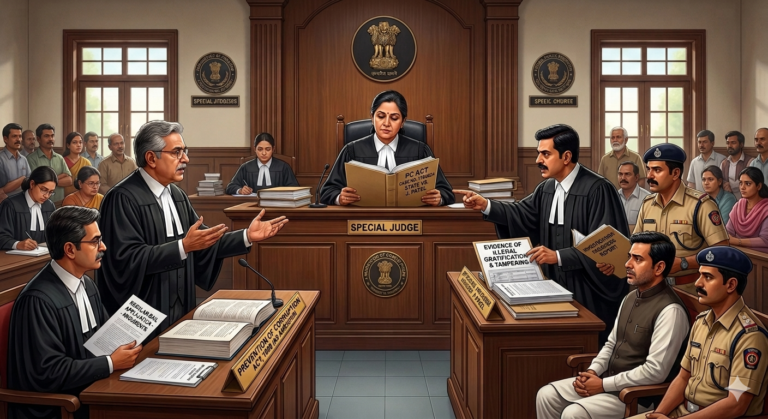
Liberty on Trial: The Conundrum of Bail under the Prevention of Corruption Act
Liberty on Trial: The Conundrum of Bail under the Prevention of Corruption Act The Prevention of Corruption Act, 1988 (“PC Act”) criminalizes bribery, abuse of official position, and possession of disproportionate assets by public servants. While the statute reflects a strong legislative intent to combat corruption, bail jurisprudence under the PC Act remains fundamentally…
Shareholder Disputes: Cause & Resolution
Shareholders comes with different background and perspective, where having disagreement over trivial points to matters related to the management of the company is a common issue now days. Out of such disagreement, there are always few issues which are failed to be resolved amicably and convert into a legal dispute…
Fraudulent Transaction and Insolvency Proceedings under IBC, 2016
The Term “Fraud” is an involvement of intentional deception or deceitful motives to gain of an unfair advantage or cause harm, encompassing both civil and criminal offenses. It includes false statements, concealment of facts, and actions intended to deceive others, often with the intent to induce someone into a contract or…
Termsheet- A Gateway to Investment
This article provides a comprehensive overview of term sheets in business transactions and investments, particularly in the Indian legal context. What is termsheet? A term sheet is fundamentally a non-binding document that outlines the basic terms and conditions of a potential business transaction or investment. While the passage romanticizes it…
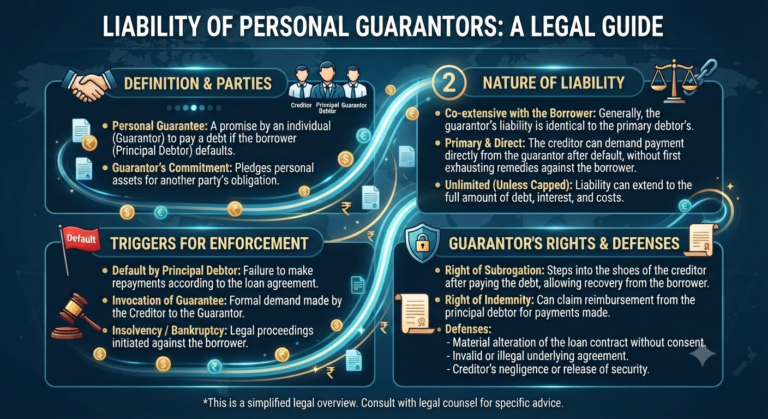
Liability of Personal Guarantors Under the Insolvency and Bankruptcy Code, 2016
Liability of Personal Guarantors Under the Insolvency and Bankruptcy Code, 2016. A practical guide to Sections 95 & 96 of IBC, 2016 for promoters, directors, HNIs and creditors Introduction Almost every substantial business loan in India carries a hidden second signature. Behind the company’s stamp sits a promoter or director…
Are Employment Disputes Arbitrable?
Arbitration is a private dispute resolution mechanism where two or more parties agree to resolve their current or future disputes before an Arbitral Tribunal in an alternative to adjudication by courts and other public fora established by law. The mutual consensus of parties to resort to arbitration for resolving disputes…