
Similar Posts
Investment Disputes Between Investors and Promoters Under the Companies Act, 2013: A Corporate Lawyer’s Perspective
Investment Disputes Between Investors and Promoters Under the Companies Act, 2013: A Corporate Lawyer’s Perspective Investment Disputes Between Investors and Promoters Under the Companies Act, 2013 A Corporate Lawyer’s Perspective India has spent the last decade rewriting its reputation as an investment destination. Private equity and venture capital deployment…
Digital Personal Data Protection Act, 2023 – Implications for FinTech Businesses
Digital Personal Data Protection Act, 2023 – Implications for FinTech Businesses Digital Personal Data Protection Act, 2023 – Implications for FinTech Businesses The Digital Personal Data Protection Act, 2023 (DPDP Act), along with the DPDP Rules, 2025, introduces a comprehensive data governance framework that significantly impacts FinTech businesses in India,…
Fraudulent Transaction and Insolvency Proceedings under IBC, 2016
The Term “Fraud” is an involvement of intentional deception or deceitful motives to gain of an unfair advantage or cause harm, encompassing both civil and criminal offenses. It includes false statements, concealment of facts, and actions intended to deceive others, often with the intent to induce someone into a contract or…
Is your Arbitration Agreement/Clause valid enough and enforceable?
Today in high octane and complex business relationship runs on contractual relationship and at times the strain on such relationship results in disputes among the parties in commercial relationship which makes it difficult to continue together in business. Arbitration is an efficient and effective manner to resolve such disputes among…
Conundrum on Cheating in India: – Civil Wrong or Criminal Offence
“Cheating” generally refers to the act of dishonestly or unfairly gaining an advantage, typically in contexts of gaming, monetary transactions, relationship or professional setting. Cheating has been defined in Section 318 & 319 of Bharatiya Nyaya Sanhita, 2023 ( erstwhile Section 415-420 of Indian Penal Code, 1860) where there is inducement…
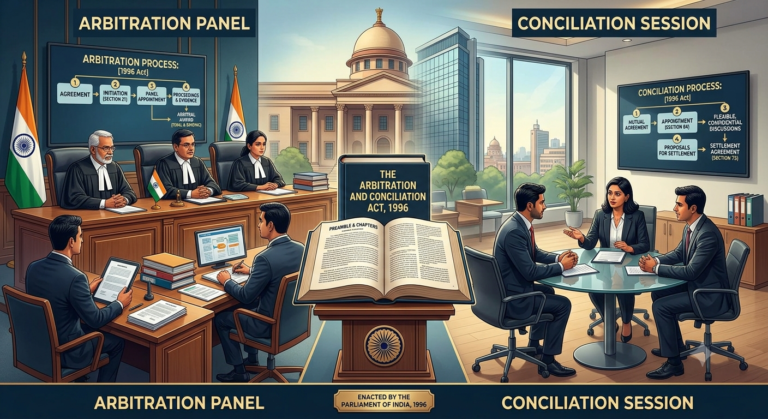
A Working Guide to the Arbitration and Conciliation Act, 1996
A Working Guide to the Arbitration and Conciliation Act, 1996. A Working Guide to the Arbitration and Conciliation Act, 1996 A Working Guide to the Arbitration and Conciliation Act, 1996 The clause nobody reads until the deal has already gone wrong — and what three decades of the 1996 Act,…